

Annika Malacinski: Between Two Worlds
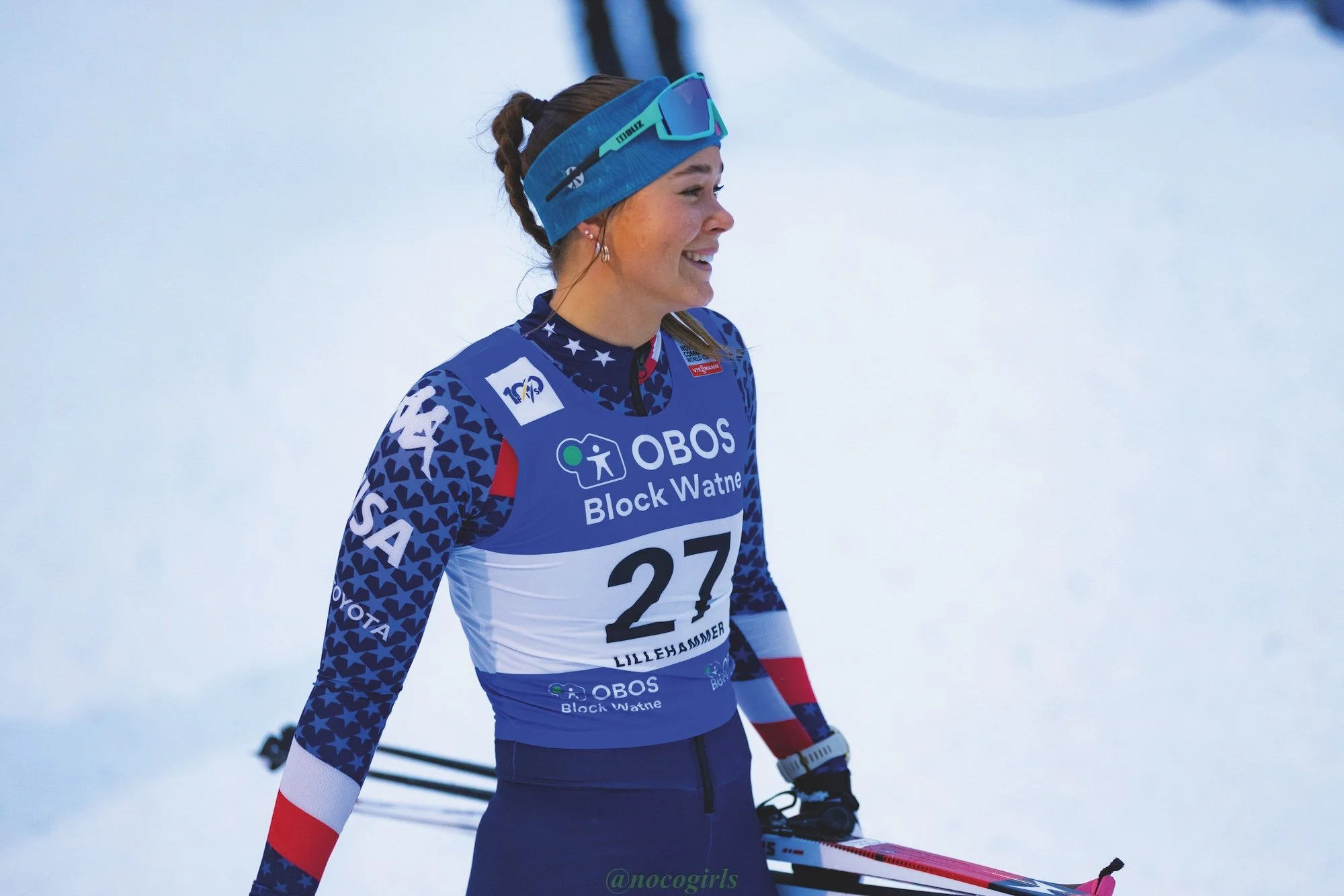
Photos courtesy of Annika Malacinski
When Nordic combined professional athlete Annika Malacinski describes her childhood, she doesn’t hesitate. “In some sense, I had lived a double life,” she says. “Which is kind of funny. The sport I do is kind of like a double life as well.”
Born and raised in Steamboat Springs, Colorado, Malacinski is the daughter of a Finnish mother and an American father. Her upbringing was split evenly between the Rocky Mountains and Finland — a rhythm that became second nature. “I did the first semester in Finland, the second in the U.S., all the way up to senior year,” she says.
It was a busy existence, and one rooted in sport. A high-level gymnast through much of her childhood, Malacinski committed fully to the discipline at 12, training under a Hungarian coach in Finland. When injuries made that dream unsustainable, she retired at 16 — but she wasn’t finished with her athletic ambitions. “I really felt like I was meant for more,” she says. “I wanted to push myself to be someone that isn’t just going to school and working, like a normal person. I really felt like I was destined for something else.”
That “something else” turned out to be Nordic combined — a sport that blends ski jumping and cross-country skiing. The spark came from her younger brother, Nicholas, who was already competing in the sport as a young teen. After watching him at a summer jumping contest in Steamboat Springs, Annika felt compelled to try it herself.
A few days later, she hiked up Steamboat’s 40-meter ski jump without much gear and without much idea of what to expect. What happened next was transformative. “I just let go of the bar — it was one of the scariest experiences in my life,” she says. “That feeling I had after one jump — I was like, ‘this is something I wanna do.’ It wasn’t like I wanna go to the Olympics, it was like ‘I’m filling this void that I lost.’”
Two years later, she was named to the U.S. national team. By 2021, she was competing in her first World Cup. Nearly five years later, she’s still competing at the highest level of the sport, racing across Europe on the World Cup circuit. However, a shot at the Olympics — the next logical step for many professional athletes — remains out of reach.
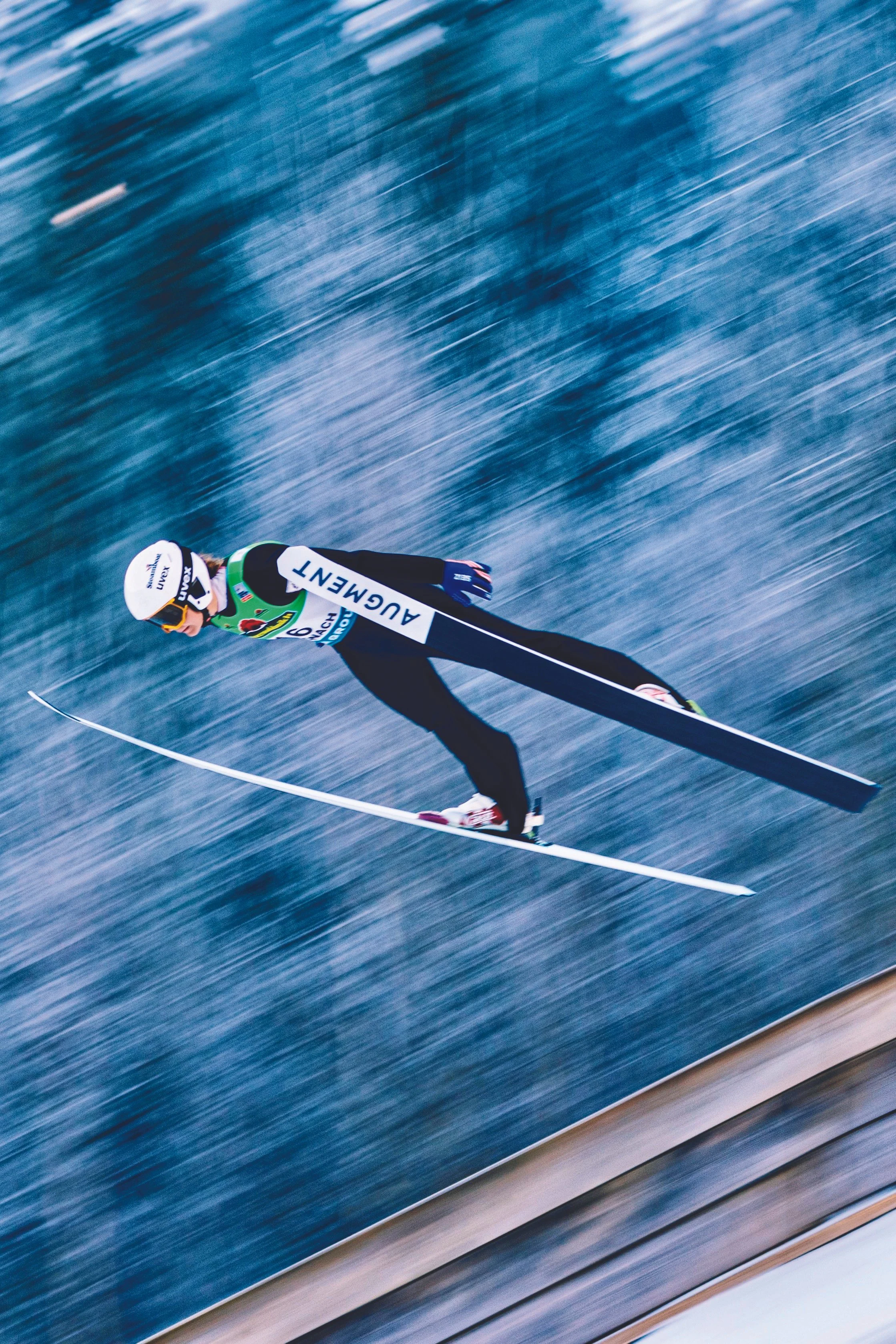
Just as Malacinski has climbed the ranks of her sport, she’s also become a central voice in the global conversation about its uncertain future. Women’s Nordic combined remains the only Olympic discipline without female participation. Although Malacinski and the Nordic combined community rallied to get the women’s event on the program for next year’s Games in Milano- Cortina, the International Olympic Committee (IOC) denied it, citing a lack of viewership and a lack of diversity on the podium. The 2030 Games are the next — and possibly last — opportunity for women to secure inclusion.
“If women don’t get accepted in 2030, the IOC will solve this inequality by eliminating the sport completely. Nordic combined is on the brink of extinction or progression — that sums it up,” she says.
It’s a fight that has started to attract attention beyond the ski world. Last spring, the short documentary Annika: Where She Lands premiered in Carbondale and Telluride, introducing audiences to both Malacinski’s personal journey and the existential struggle of her sport. “Since the film was shown, I’ve felt a big wave of support not only for me, but for the women in our sport,” she says. “It’s been really meaningful to see the conversations it’s sparked and to know that people are beginning to understand the uphill battle we’re facing to be included. It’s motivating and grounding at the same time.”
Even with the uncertainty, Malacinski’s focus is sharpened. This summer she split her time between the U.S. and Norway, working on her ski jumping and addressing a newly diagnosed iron deficiency that had been sapping her performance.
“Once I got that figured out, things started to click again, and I’ve really found my love for jumping and training in general,” she says. Her return to form was on display at the Summer Grand Prix in Val di Fiemme, Italy, a bittersweet venue since it will host the 2026 Games — where women’s Nordic combined will not appear.
For Malacinski, the joy still outweighs the struggle. “The feeling that you feel when you’re competing is so crazy — the adrenaline, the anxiety, the stress, the excitement — not even 1% of the world knows how that feels,” she says. “I just live such a privileged life. I love what I do.”
Between two worlds, jumping and skiing, in a sport balancing between survival and disappearance, Malacinski is right where she wants to be.
Originally published in the winter 2025-26 issue of Spoke+Blossom.