

Where Classrooms Meet Construction: High School Students Get A Head Start In The Trades
Before they ever pick up a calculator for geometry or business math, many Colorado high school students already know why it matters. Thanks to the Careers in Construction Colorado (CICC) program, which brings skilled trades education to more than 90 schools, students are building the connection between classroom learning and real-world careers — one measurement at a time.
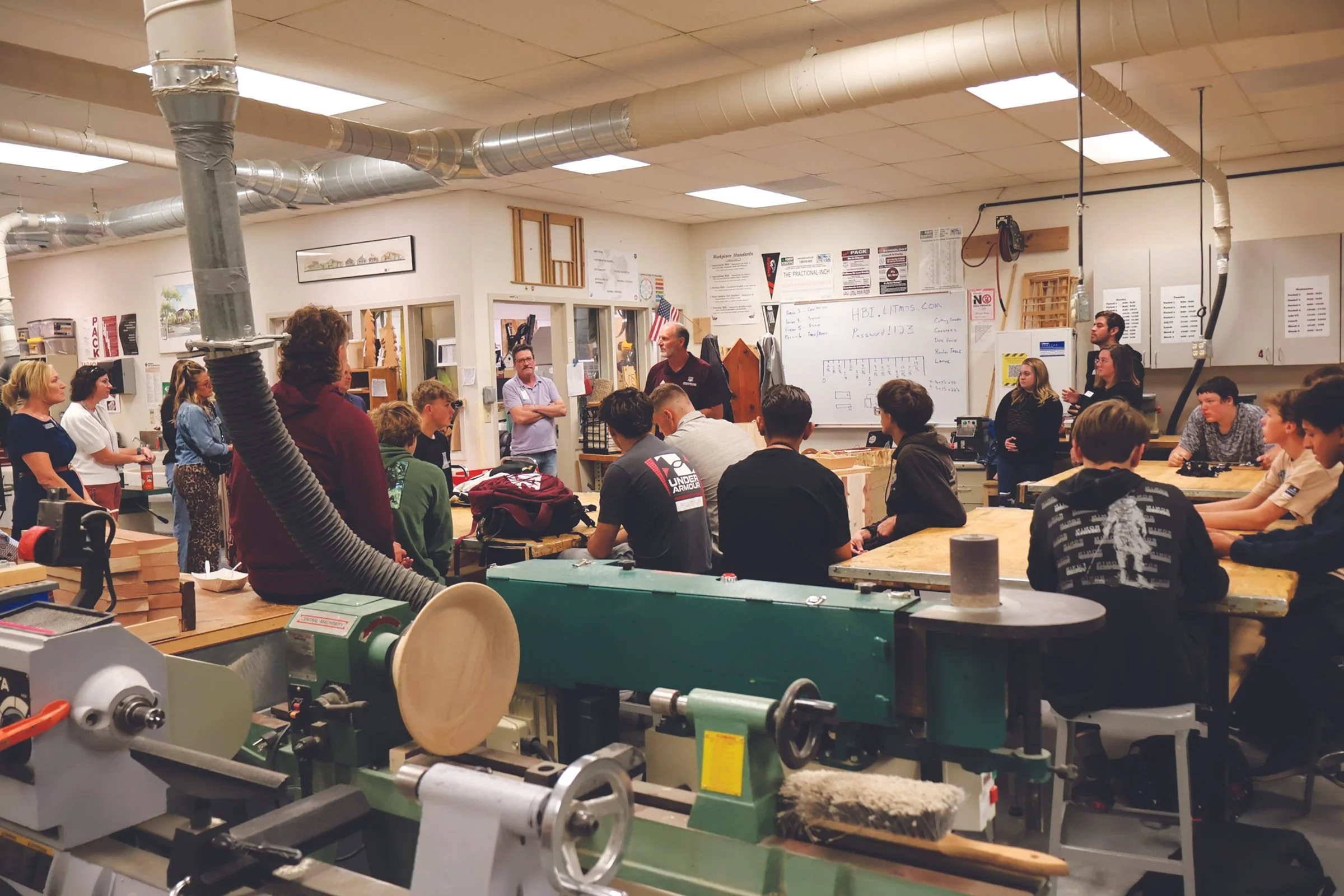
Palisade High School CICC teacher Joe Ramunno addresses some of the 60 students enrolled in the CICC program. Photo by Crystal Green.
Building Skills, Building Confidence
During their first year, students are introduced to the construction industry and complete Department of Labor-recognized Pre-Apprenticeship Certified Training (PACT), which certifies students as “work-ready.” Students also earn their OSHA (Occupational Safety and Health Administration) 10 certification — 10 hours of basic awareness training to recognize, avoid, abate and prevent workplace hazards. Students visit construction job sites and local business owners come to classes to talk about possible careers with their companies.
The CICC curriculum is taught as an elective class at participating high schools, and after learning the basics, schools can offer 10 different elective courses that teach the various trades. Those skills include carpentry, electrical, plumbing, masonry, HVAC, landscaping, painting and finishing and building construction technology.
“Our goal is to give kids a chance to learn a life skill that will financially provide for them,” says Karrie Gutzwiller, who serves as CCIC’s committee chair Western Colorado. “We’re growing our own workforce. We’re changing the landscape of the construction industry for years to come.”
The Housing and Building Association (HBA) in Colorado Springs founded the nonprofit Careers in Construction Colorado in 2015, after noting a need to cultivate the next generation of skilled professionals. The organization partners with school districts to offer hands-on training on high school campuses.
Expanding Opportunity Across Colorado
Gutzwiller bumped into a former colleague and CICC cofounder at a builders’ trade show in Las Vegas, who suggested she expand the program on the Western Slope. After pitching the idea to the Housing and Building Association of Western Colorado Board, of which she’s a member, they asked Gutzwiller to head up the program in their HBA area of Mesa, Delta and Montrose Counties. As head of business development at Fixture Studio, a design and building firm in Grand Junction, Gutzwiller was already involved in the construction industry.
Currently, over 15,000 students in 91 schools in Colorado have participated in Careers in Construction Colorado. Thus far, Gutzwiller has helped launch CCIC at Palisade, Fruita Monument, Grand Junction, Olathe and Montrose high schools, as well as the Career Center. She says CICC will be added to Central High School in Grand Junction next year.
The industry projects there will be 30,000 construction trade job vacancies by 2030. Leaders of CICC expect there will be 5,000 students in 100 schools in Colorado enrolled in the program by 2028.
Palisade High School students Todd Mordenson and Gavin Toole, both 17, say they are glad the classes are available at their school. “We don’t have to travel to Colorado Mesa University or go off campus; we can do it here at the high school,” Mordenson says. “They made it easy for us to get our certifications; we didn’t have to leave campus,” Toole adds.
CICC’s goal is for all schools to develop a build project as part of the program, says Gutzwiller. That could be a greenhouse, shed and even a house. Last year in Colorado Springs, students helped build 10 houses, she notes. In Summit County, CICC students built a tiny home. Proceeds from the sales of any building projects go back into the program.
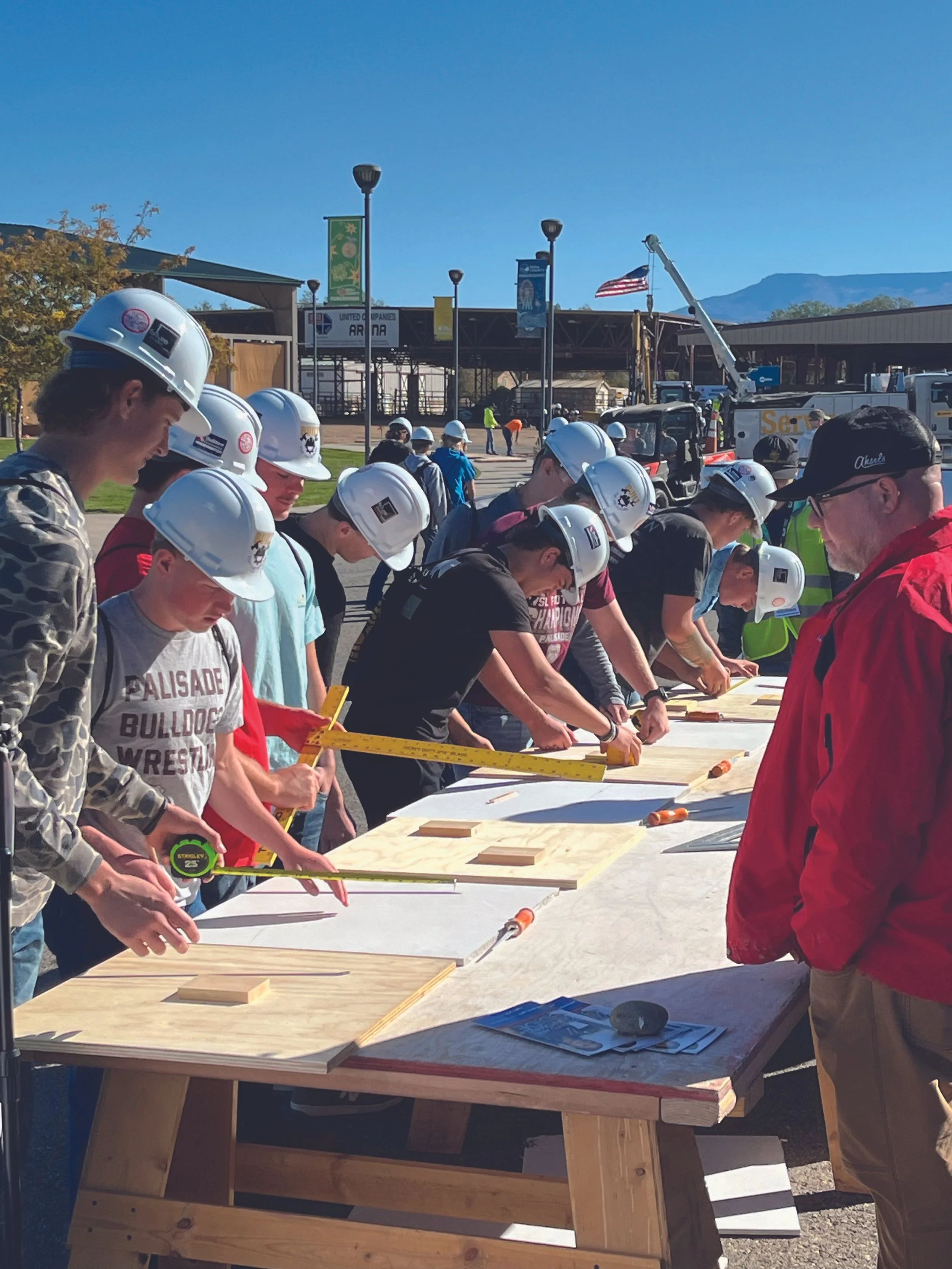
Students participated at an event related to the CCIC program held in October at Mesa County Fairgrounds. Photo by Joe Ramunno.
While schools pay the teachers’ salaries, the local HBA’s chapter of CICC pays for the teachers to take the training and provides teachers an additional stipend to learn and teach the program. It also covers the cost of materials, such as personal protection equipment like hard hats and tools.
Hands-On Learning, Real-World Results
At Palisade High School, CICC teacher Joe Ramunno is helping his students convert a toy house into a shed that the program will use for storage. Ramunno says there are 60 students enrolled in CICC at Palisade High School. “It’s great because 75% is hands-on work, and 25% is classroom time,” he says. “The kids really like the hands-on part of it. It’s a good system for these kids to get work experience.”
Adyn Cassity, 17, and Tobyn Trottier, 18, are both enrolled in the Palisade High School program. They like how CCIC has expanded their options. Cassity says he’s looking forward to installing electricity in the shed next semester. Trottier mentioned how he’ll be able to enter the workforce sooner with the necessary certifications under his belt.
There are 240 students enrolled in CICC in the Grand Valley – that number grows to 320, when you add the Olathe and Montrose schools. Additional students are enrolled in CICC at schools in Durango, Ignacio, Bayfield and Meeker, says Trina Nostrand, Career Navigator for CICC in Western Colorado. Along with the HBA, she will continue to reach out to schools in the area to expand the program.
Once students have completed and passed their OSHA-10 and PACT course, they are eligible for various paid and unpaid internships, says Crystal Green, career coordinator at Palisade High School. As those students near the completion of their first year, Green says she expects to begin placing students in internships in January that will last throughout the school year. Depending on the business, some internships may continue during the summer. Colorado is the only state that has a waiver that allows students to start working at construction sites at age 15 – because of this program, says Gutzwiller.
“Ultimately, we are hoping to help students get certified through CICC, find students an internship, apprenticeship or secondary education to jump start their career immediately after high school or set them up for success in higher education,” says Green.
“CICC will have a lasting impact on the community,” adds Gutzwiller. “Kids will graduate from high school and be ready to work in the skilled trades. Some will go right into apprenticeships, while others may choose to attend two-year tech schools, or obtain a four-year degree in construction management. For those who choose to not attend college, a job will be waiting for them because of the skills they gained in high school.”
Originally published in the winter 2025-26 issue of Spoke+Blossom.