

Navigating Spring In The Backcountry: Using Modern Tools To Read Changing Terrain
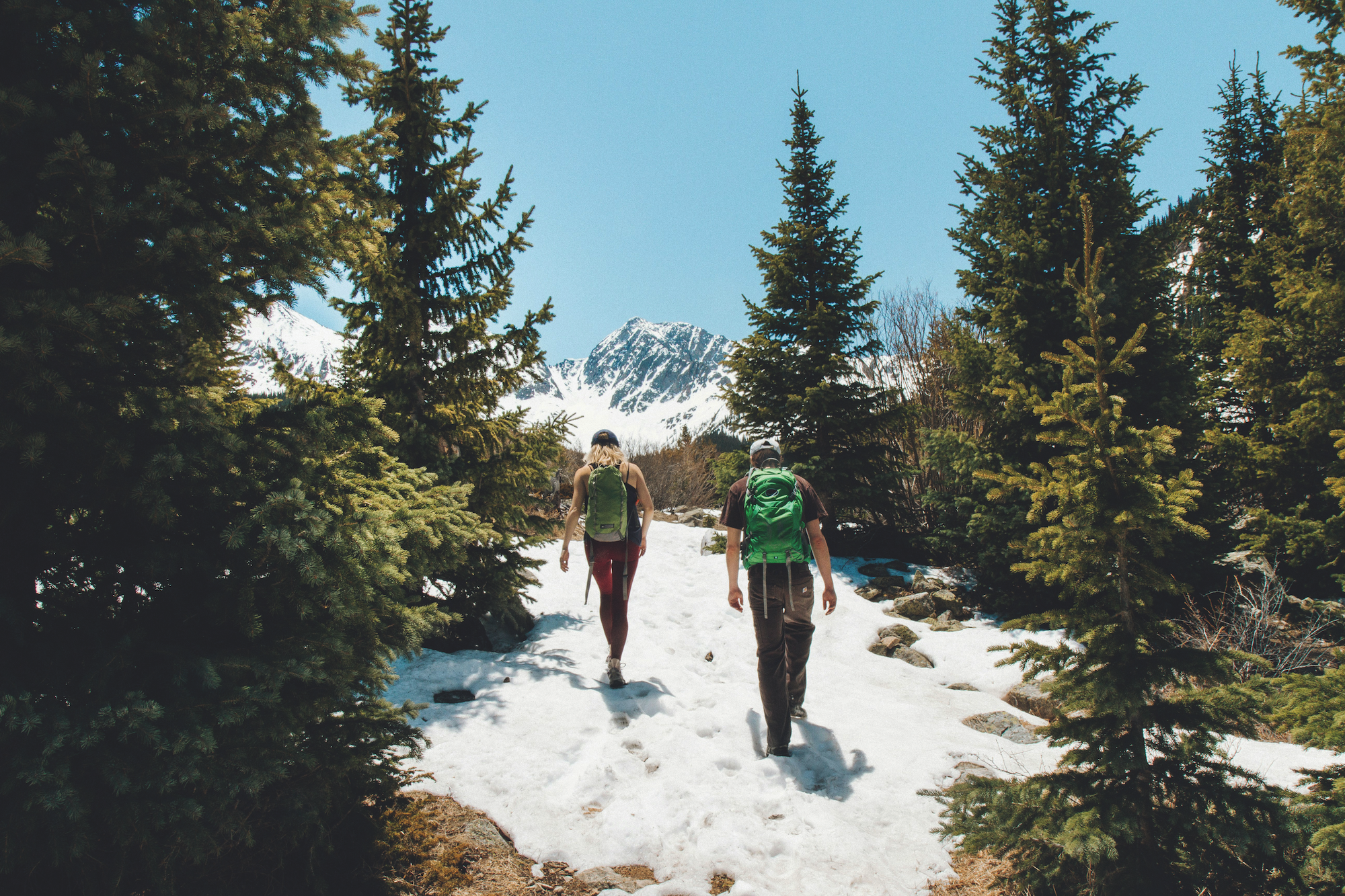
Spring is one of the most unpredictable seasons in the mountains. Snowpack shifts daily, access roads open and close, and a single route can involve winter and summer conditions in the same outing.
In Western Colorado, where steep terrain and spotty cell service are the norm, preparation and adaptability are often what separate smooth days from complicated ones.
Digital mapping tools have become part of that preparation, working alongside traditional skills like avalanche education, weather awareness and route-finding. Andy Sovick, product manager of content for onX Maps and founder of Beacon Guidebooks, sees mapping technology as a way to support better decisions when plans inevitably change. Here he discusses the GPS navigation app, onX Backcountry, which I’ve tested but only skimmed the depth of its capabilities.
“Your map shouldn’t disappear when your plan does, and that’s why onX Backcountry is focused on giving our users clarity when it counts,” he says. “Through specifically tailored tools and offline features like 3D mapping, custom route-building and terrain assessment, we’re empowering folks to make smarter decisions in the backcountry even when they don’t have cell service.”
Backcountry recreation today spans multiple seasons and sports. Ski touring in March gives way to hiking and biking by late spring, often on the same trail systems. Understanding terrain year-round is becoming increasingly important.
“Tons of our users — and I think it’s safe to say tons of folks who get out in the backcountry — engage in multiple activities like hiking, mountain biking, ski touring and climbing,” Sovick explains. “We make it easy by giving users content and tools for all of their pursuits in one place, empowering folks to both plan and navigate in the field.”
For users, that means treating the landscape as dynamic rather than static — conditions, hazards and access points change, even when the route stays the same.
TERRAIN AWARENESS IN THE COLORADO MOUNTAINS
From the Elk Mountains to the San Juans, Western Colorado offers dramatic terrain paired with limited connectivity. Knowing where you are is only part of the equation; knowing what’s around and below you matters just as much.
“Having downloadable maps (topo, satellite and 3D) for offline use is probably top of the list for me since it doesn’t take much to lose cell service here,” says Sovick, who is based in Gunnison. “It’s pretty handy to toggle the ‘cellular service layers’ on to check and see whether or not I’ll lose service.”
Land ownership is another practical concern. “Our layers for public and private land boundaries continue to be one of the most relevant and critical functions,” he says, noting how quickly access issues can complicate otherwise straightforward outings.
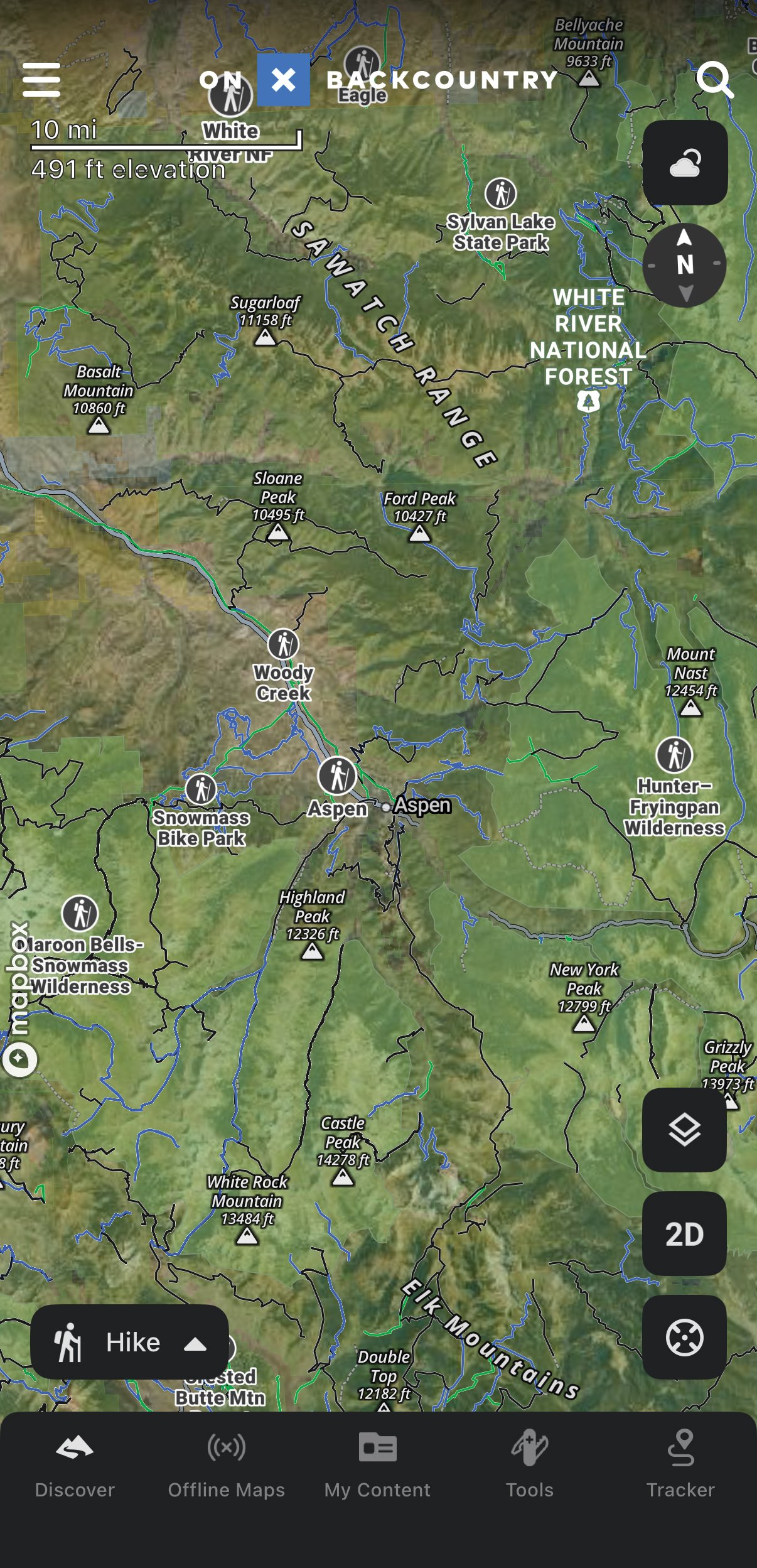
Understanding exposure is equally critical in steep terrain. “Tools that help you understand exposure in real time add a crucial layer of awareness beyond simply knowing where you are,” adds Sovick.
While avalanche forecasts describe regional hazard, translating that information to specific slopes requires terrain awareness. The Avalanche Terrain Exposure Scale (ATES) helps classify terrain from non-avalanche to extreme.
“The Avalanche Terrain Exposure Scale is our magic wand to understanding avalanche terrain,” Sovick says. “It’s a simple system that classifies terrain from non-avalanche, up to extreme, and helps users decide how to navigate it or avoid it altogether.”
He notes that more recreational users are beginning to factor ATES into trip planning, similar to how avalanche forecasts are now standard reading before winter outings.
VISUALIZING RISK + ADJUSTING PLANS
For skiers, understanding where avalanches could travel — not just where they might start — can affect route choices and group management.
“One of the coolest tools in our bag that many people don’t know about is the Avalanche Simulator,” Sovick says. “It literally illustrates the avalanches a mountain is capable of producing.”
Seeing potential paths can help users avoid runout zones and better evaluate exposure, especially when routes pass beneath steep slopes.
Spring also brings rapidly changing snowlines and trail conditions.
“You can see satellite imagery that was updated within three to 14 days to check snow coverage,” Sovick says, explaining how recent and archived imagery can help set realistic expectations for access and conditions. Realtime precipitation radar can also help predict muddy trails or incoming storms.
Experience doesn’t eliminate uncertainty in the mountains, and proper preparation can make all the difference.
“Sometimes, the thing that saves your bacon is a feature as simple as our ‘Tracker’ that leaves a breadcrumb trail in case you need to find your way back,” Sovick says.
“I’ve been playing in the backcountry, quite obsessively, for my whole life, and I’d like to think I know the Elk Mountains extremely well,” he notes. “However, what I’ve learned above all else over the decades is that the mountains don’t care how experienced or smart I am.”
The takeaway is simple yet crucial: Even on days expected to be tame, bring the tools that give you a leg up and increase your margins of safety.
In spring, when conditions are in constant transition, that extra margin can save the day.
Originally published in the spring 2026 issue of Spoke+Blossom.