

Children's Museums of Western Colorado
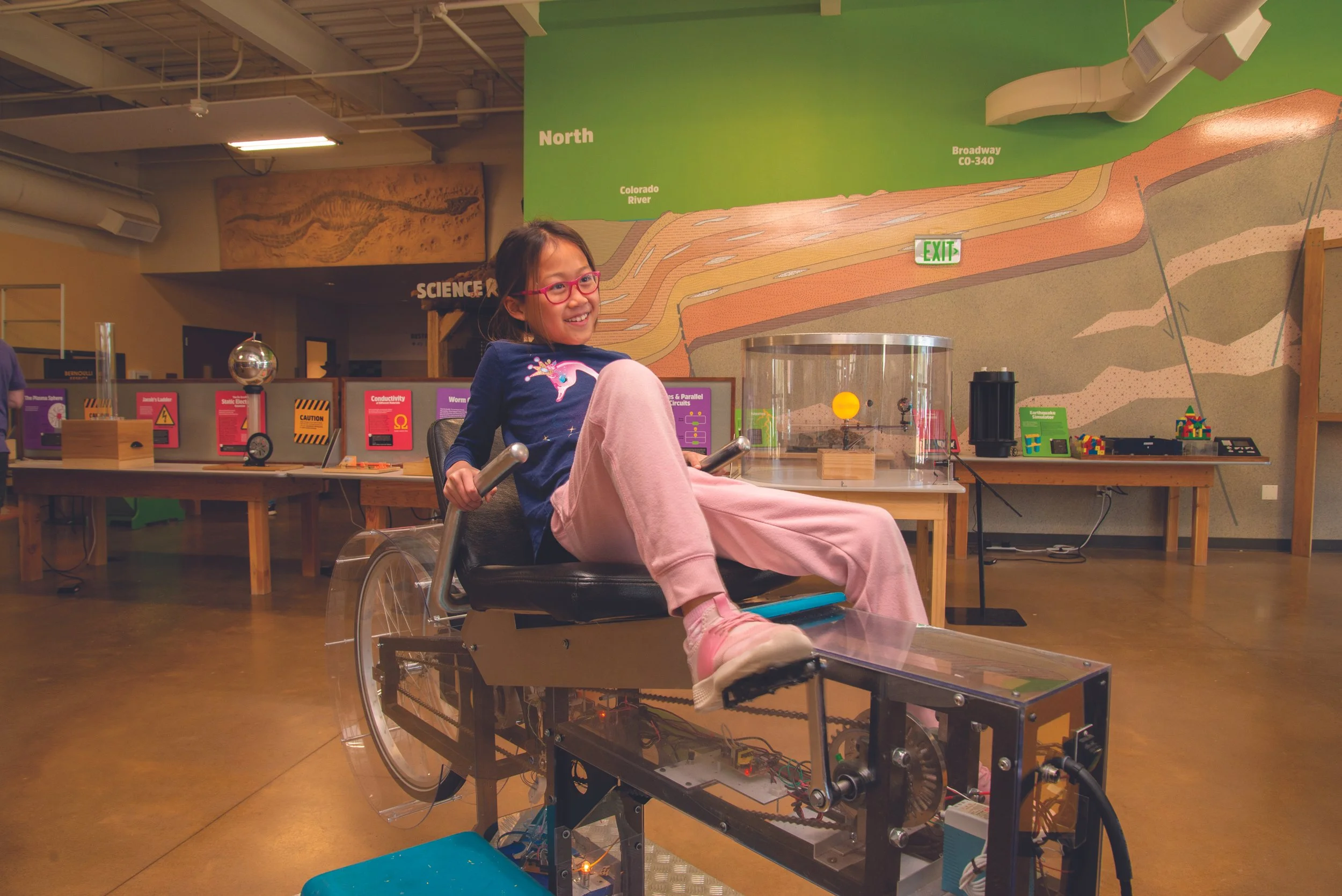
EUREKA! McConnell Science Museum in Grand Junction. Photo courtesy of EUREKA! Science Museum.
There are countless reasons a family might move to Western Colorado. Boundless trails, farm-fresh food, a more intimate community. It’s a vibrant place to raise a child.
There is little, however, that is crafted with families in mind, to say nothing of kid-centric spaces. Recreation centers and libraries offer some resources, but are shared spaces that primarily cater to adults.
Enter the children’s museums. These are spaces for learning and play, curated with young brains and hearts in mind. And year after year, the scope and distribution of these spaces is growing across Western Colorado.
The EUREKA! McConnell Science Museum in Grand Junction has been nurturing young minds since 1999. At the behest of John McConnell, a retired physicist, the space seeks to put “science in the hands of kids.” With rotating exhibits (many of which are still built by McConnell to this day), the museum has grown significantly over the years, and is now housed in the Colorado Mesa University campus’ Confluence Hall.
The space is versatile, with summer camps, multiple pre-K groups and 55+ exploration groups for “life-long learners.” Outreach is also core to the tenets of the museum, with a significant scholarship program, as well as the newly christened fuTÚros bilingual leadership program.
At EUREKA!, “the principles of play directly lead learners to scientific thought,” says Jenn Moore, executive director. There is an “intention to make scientific concepts approachable and fun. We believe in the power of play.”
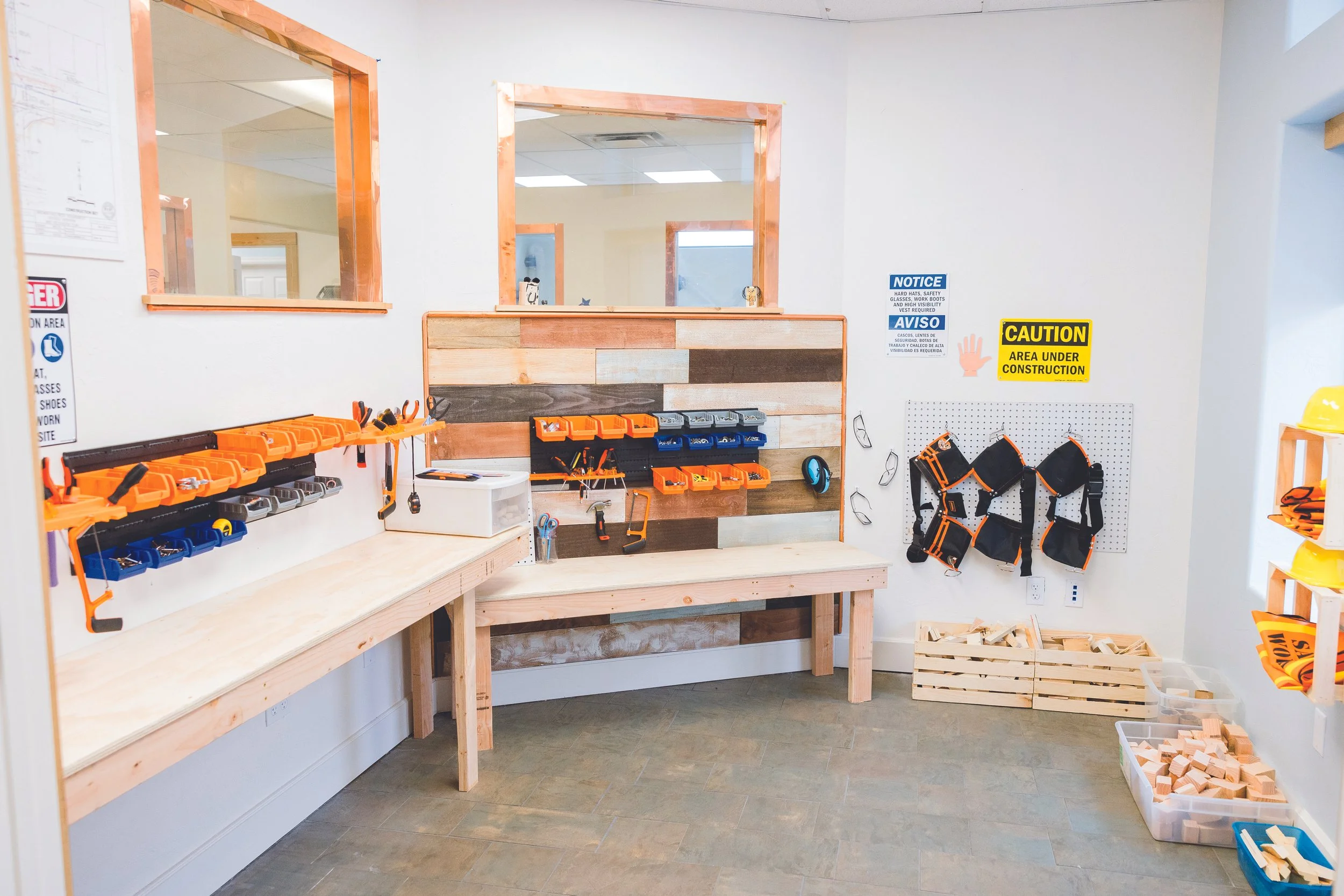
Montrose Children’s Museum. Photo by Mindful Family Photography.
The spirit of play is requisite at the Montrose Children’s Museum as well. Initially serving the community as a mobile museum, now with a permanent location, the museum can “fill a gap by offering a safe, welcoming environment where kids can explore science, art, problem solving and social skills,” says director and founder Mallory Shaffer.
The museum is diverse, mixing musical instruments with hands-on activities like building circuit boards. There’s a crafting corner, veterinarian office, cardboard workshop and sluice for unearthing gems. A fun space, certainly, because “play is how young children make sense of the world,” says Shaffer. “When kids pretend to run a grocery store, they’re developing real cognitive and social skills. It looks simple, but it’s foundational.”
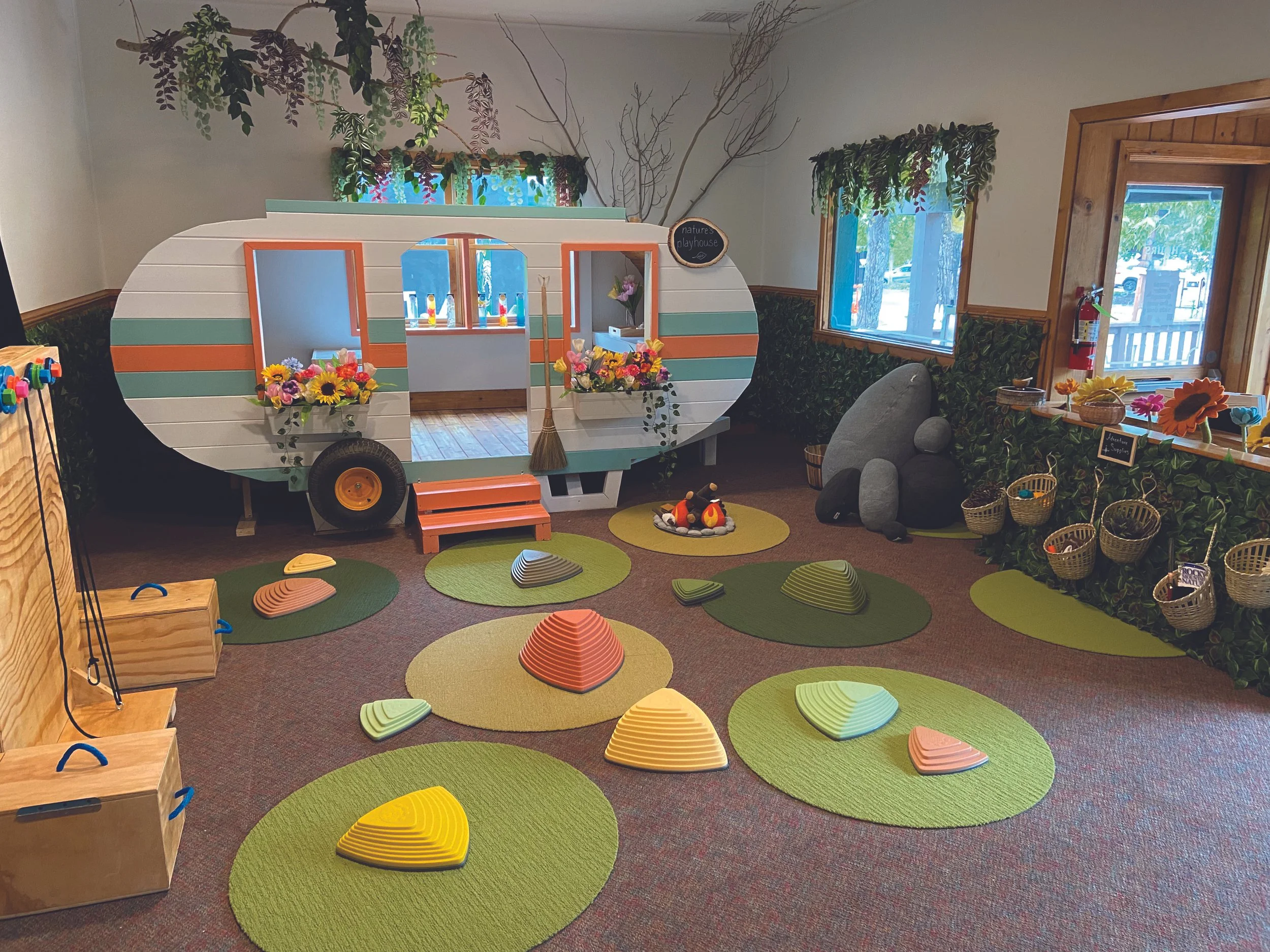
The Trailhead Children’s Museum in Crested Butte. Photo by Xavi Fane and Jeremy Belton.
Sarah Broadwell, executive director at The Trailhead Children’s Museum in Crested Butte, reiterates that “different types of play support different elements of learning and development.” The Trailhead has exhibits “that are intended to inspire dramatic, imaginary, sensory, problem solving, collaborative and creative play.” Diverse play begets diverse benefits, and so spaces like The Trailhead can “support the physical, mental, emotional and social development of children and families.”
Much of this is born from the freedom in a space like a children’s museum. Where in many spaces kids are expected to act with decorum, at The Trailhead, kids are encouraged to express themselves. “The Art Bar is an open-ended space where everyone has access to high quality and unique materials and are encouraged to experiment, make messes and create with no bounds,” says Broadwell. This is foundational in a place like Crested Butte, where the museum is “one of the only spaces that is solely devoted to children.”
This is huge for children, but also, as Broadwell notes, for parents. “We are a place where parents can connect with one another, connect with their kids, and find support, validation and fun.”
The Powerhouse, a STEAM (science, technology, engineering, the arts and mathematics)-centric museum in Durango, further lends credence to the notion of museum as community hub.
Like much of Western Colorado, resources for many families are lacking in Durango, so spaces like The Powerhouse provide enriching experiences for the community. Programming ranges from dance to gardening, music and yoga, and encourages engagement from children and caregivers alike. “We host the San Juan Regional Science Fair, regional Lego League, Destination Imagination, as well as Camp Discovery, our signature summer camp program,” adds deputy director Sydnie Golden.
The space is open year-round and is “housed in a 133-year-old historic building which still retains some historic pieces of equipment,” remarks Golden about the building, which is on the National Register of Historic Places. While it was a power station, it’s built in the style of a Spanish Mission and as such evokes a small-town community. The kind of space, as Golden says, “that can support our multi-generational community. We want to be a place where kids play and families connect.”
The space’s namesake, The Powerhouse, sheds some light on the role of a children’s museum in Western Colorado. There’s a luminosity to these kinds of spaces — an ability to enlighten young heart and minds and in the process, illuminate their communities.
Originally published in the spring 2026 issue of Spoke+Blossom.