
Art With A Purpose: Local Artists Creating Change
Art can always make a statement. But some Western Slope artists go a step further, creating work that doesn’t just send a message; it becomes a resource.
Artists, especially those whose murals, sculptures and more adorn public spaces, enjoy a unique opportunity to catch eyes and convert attention to action. And, on a more personal level, some find themselves in the perfect position to start important conversations on the ground using art as a point of connection.
These local creatives are using their skills and spirit to improve their communities through art — and, of course, to make them just a little prettier.
SETH WEBER
Paonia painter and sculptor Seth Weber’s work has been featured at exclusive galleries throughout the state, but these days his favorite projects are public installations that entire communities can enjoy.
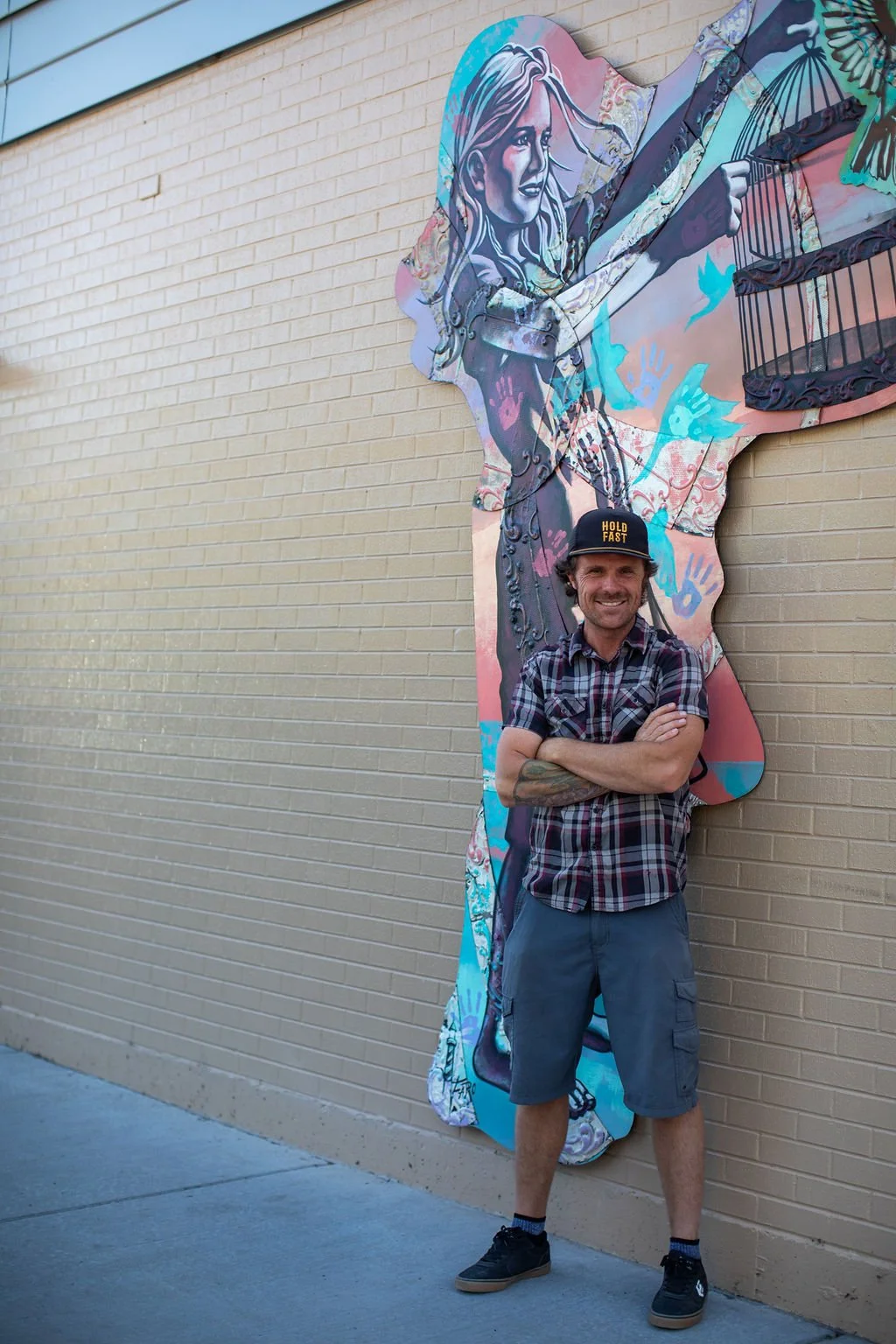
Photo courtesy of Seth Weber
Weber’s murals and sculptures pop — sometimes literally — off sidewalks and walls all over the Western Slope in places like Montrose, Grand Junction and Cedaredge.
Lately, he’s been working with sculpted, painted steel to add depth to murals or create free-standing structures that turn ordinary slabs into a real-life pop-up book.
And like any good book, some of Weber’s most meaningful works tell a story: the story of the Western Slope’s abused, abandoned and neglected children, and what people can do to help.
He explained he and his wife Chelsea were foster parents for nearly a decade, and adopted three children out of the system.
During that experience, he says, “We just really came face to face with the reality of how dire some situations get for kids right in our backyard.”
“These kids don’t choose where they’re born,” Weber adds, “And they’re born into some really intense situations. And then they’re filtered through a system that can also be pretty rough.”
He believes good people can make a difference for these children and within the system. But first, they must be aware of the problem and the concrete steps they can take to get involved.
That’s why he started The Faro Project, named after the Latin word for “beacon” or “lighthouse.”
Through the initiative, Weber partners with libraries to create public art installations that raise awareness to children’s issues and encourage visitors to step inside, where kiosks provide resources for those seeking help or looking to get involved. He also works with each library to ensure staff are familiar with local resources, equipping them to better support children in need and connect prospective volunteers with organizations that can use their help.
So far Weber has completed installations at the Paonia and Delta libraries, and he’s currently working on a project at the Naturita Community Library. Each one celebrates the strength of the kiddos who were unfairly dealt difficult hands, and Weber works with local organizations like Court Appointed Special Advocates (CASA) to give these kids a chance to be part of the creative process.
“The kids put their handprints all over the art,” he says.
He hopes every installation is its own “little beacon,” existing as a tool as well as an homage. Each features a plaque explaining the project, while the indoor kiosks feature information on organizations like CASA, Families Plus and Project 127.
According to Weber, the work is already making a difference. When he completed the sculpture at the Paonia Library over a year ago, he says there was only one CASA advocate in the entire North Fork Valley. Now there are 10.
And Weber has no plans of slowing down. He aims to complete the Naturita project this fall, and his next goal is a collaboration with the Montrose Library.
He notes the projects are made possible through a combination of grants and donations, and he works with the Montrose Community Foundation to handle the administrative side of the mission.
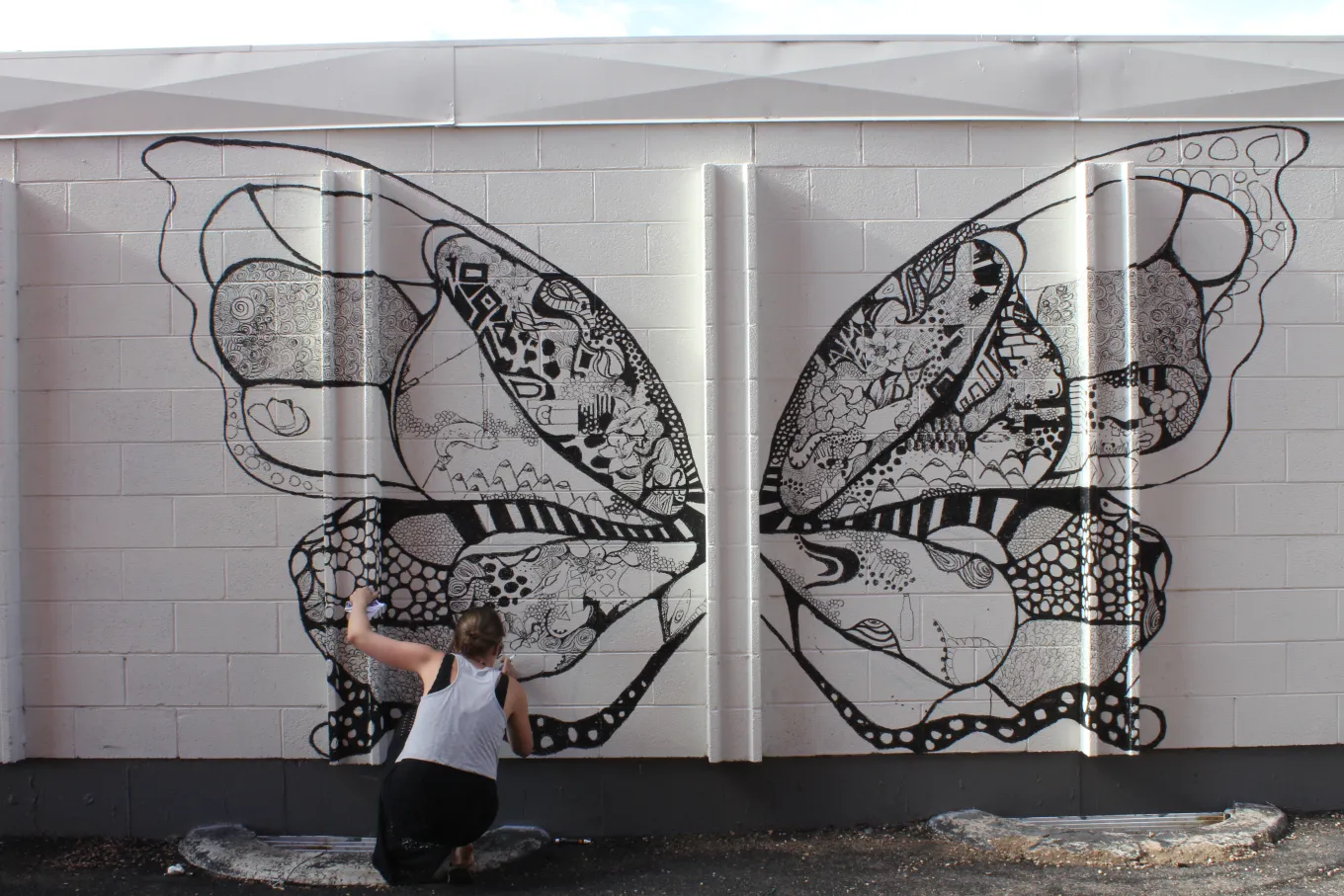
Photo courtesy of Kelsey Montague
KELSEY MONTAGUE
Fourth-generation Coloradan Kelsey Montague’s murals can be found around the country and throughout the digital world, with commissions from stars and brands ranging from Taylor Swift to the Smithsonian.
She’s also completed more than a dozen public art projects in the Centennial State, including a piece called “Urban Jungle” at the Vail Village Parking Structure and multiple murals in her hometown of Denver.
“I love creating art for my local community,” she says.
Montague’s bright, interactive murals let viewers become part of the art, and she’s created pieces for a variety of causes including AIDS relief and honoring the victims of the Parkland, Florida school shooting in 2018.
Much of her street art features the #WhatLiftsYou hashtag, encouraging passersby to ponder, and share, what inspires them.
“I wanted people to reflect on what they value most and to share that online,” she says. But, she adds, the mantra isn’t just a hashtag. Montague and her team have turned it into an online curriculum that uses her own journey to teach kids about street art and encourage them to follow their dreams. The program includes a handful of videos geared toward elementary schoolers that highlight the artistic process and importance of creative expression, culminating in an assignment for students to create their own art.
Photos courtesy of Mike and Sara Neil
“I wanted to create a program for kids that explained how I got into art and street art,” Montague says, “so aspiring artists knew it was possible to make a career and an impact as an artist.
MICHAEL AND SARA NEIL
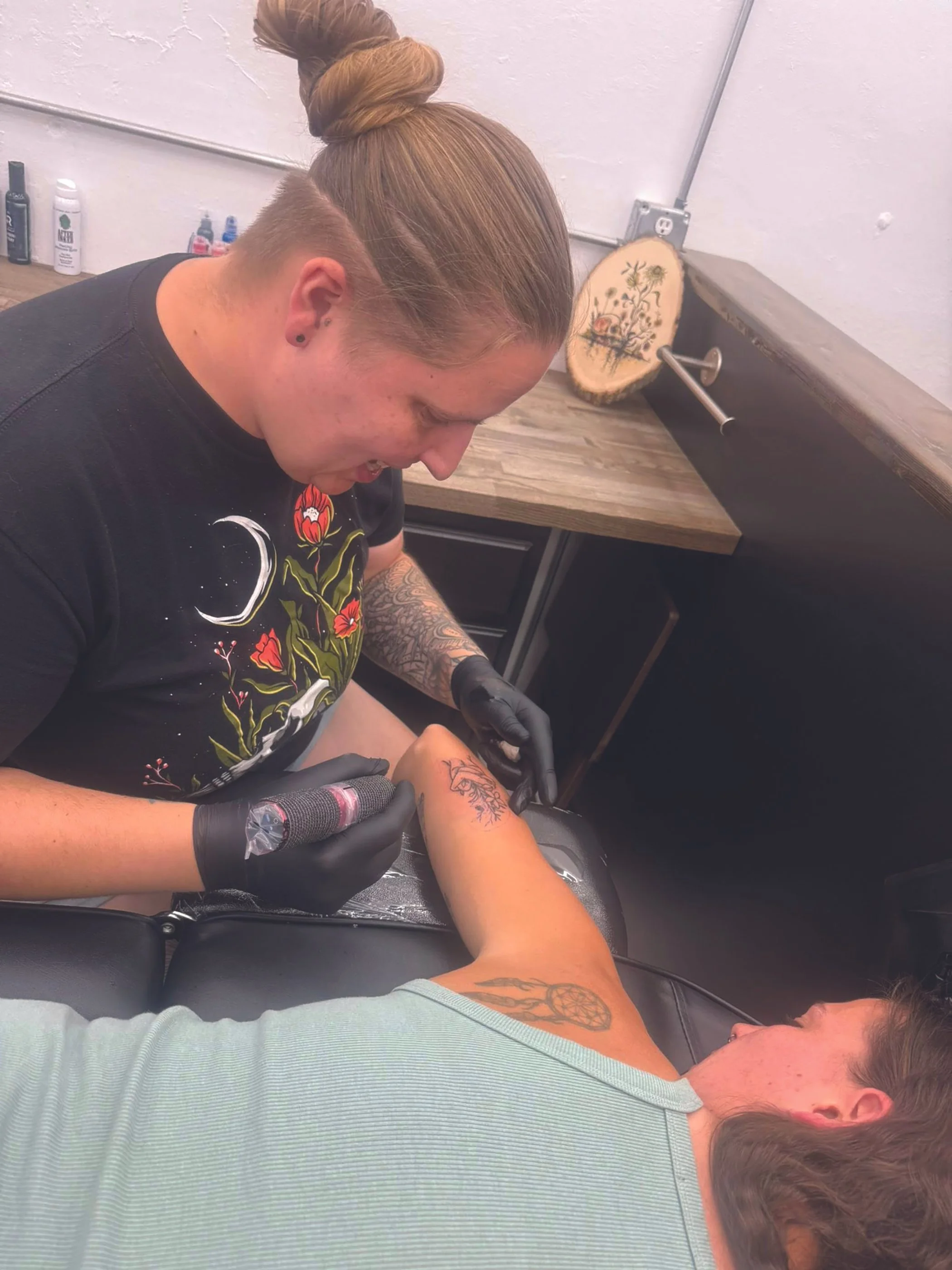
Tattoo artists Michael and Sara Neil know getting inked can be an intimate and sometimes therapeutic experience. It can also lead to big conversations, and in addition to giving individual clients a safe place to open up, the Neils use their work to get the ball rolling whenit comes to talking about mental health and suicide prevention in the Hotchkiss community.
“We personally have lost way too many people,” Sara says. Among them is Mike’s son, who took his own life at 17.
The couple believes simply discussing these topics is an important step toward breaking the stigma that prevents many from seeking help. Every September, their shop, Needle Rock Body Art, hosts a flash day to fundraise for a local mental health-related charity. The event coincides with Suicide Prevention Month, and allows clients to pick from a selection of artistic pre-drawn semicolon and inspirational designs. Sara explains authors use semicolons to continue a sentence they could have ended with a period, and the mark has been picked up as a symbol of suicide prevention and awareness.
Needle Rock also offers semicolon tattoos for free throughout the year, but no matter what ink a client is getting, Sara stresses the artists are there to lend an ear and offer resources when they can. Sometimes, this looks like informing clients about other businesses that are hiring or local food banks, as she’s seen more and more members of her community struggle this year for economic reasons.
“A lot of times, mental health is stress-related due to other things you’re dealing with,” she says. She tries to use her local knowledge to help people make connections.
Mike adds that tattoo sessions don’t always trend toward a conversation about mental health. But, when they do, he often shares his own story and tries to set an example of speaking openly and honestly about suicide and mental health.
He wants people to know it’s tough to talk about mental health, and can even be lifesaving — especially when it becomes a community-wide conversation.
Originally published in the fall 2026 issue of Spoke+Blossom.