

Crosswalks For Critters: Why Wildlife Crossings Are A Win For Everyone
On Colorado’s highways, the wild world and the modern one collide every day. Mountains, meadows and migration routes were here long before roadways intersected them. Now, as traffic barrels through the state, wildlife crossings are slowly stitching those landscapes back together.
Wildlife passages aren’t just conservation projects — they are smart, practical solutions that protect animals and humans while keeping our roadways moving.
WHEN ROADWAYS CUT THROUGH THE WILD
Highways and roads do more than connect towns; they also slice through our ecosystem.
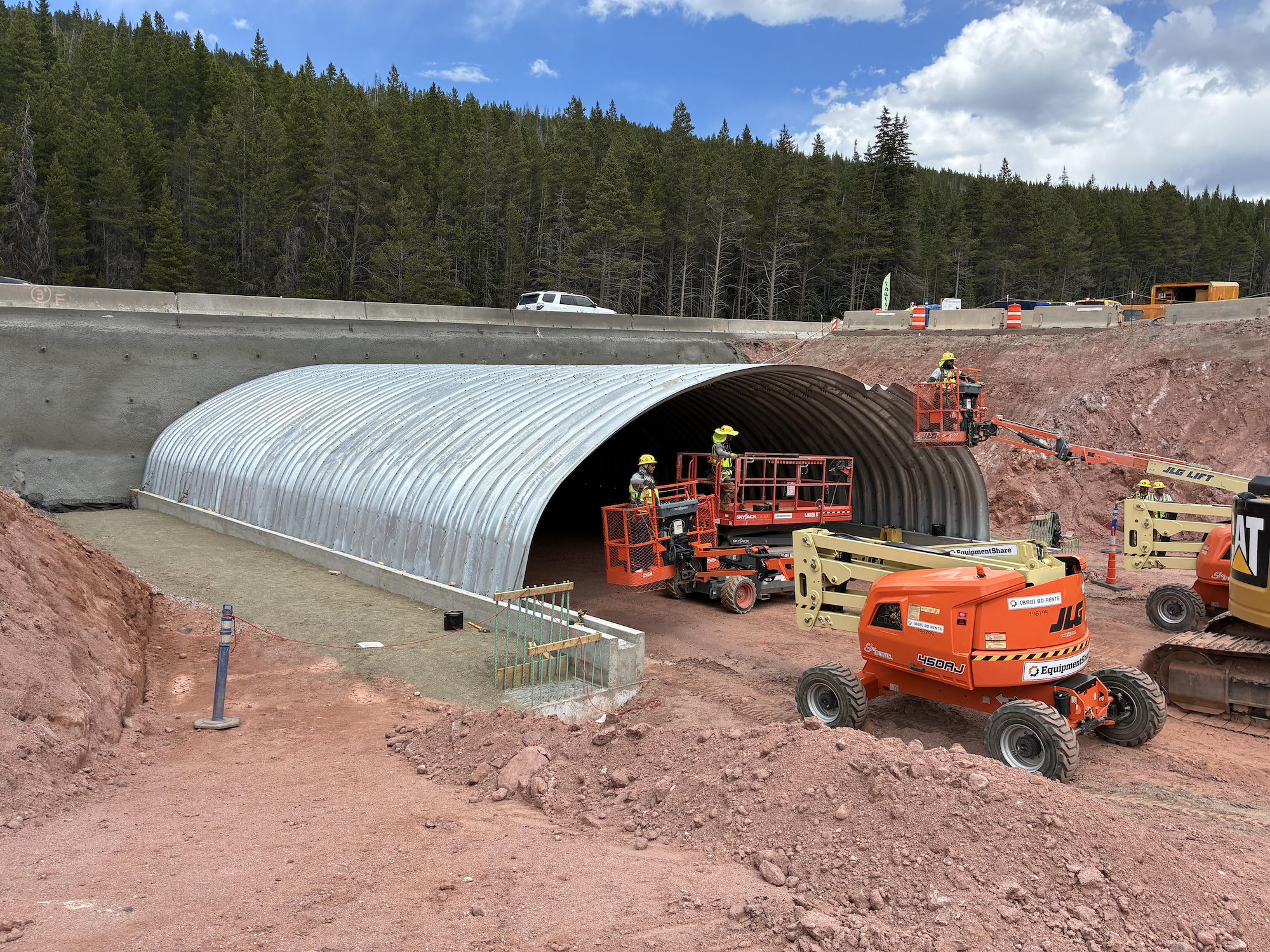
Photo courtesy of Colorado Department of Transportation
Major highways fragment habitats, breaking up the natural territories animals depend on to survive. When a species can’t move freely, its world shrinks. Genetic diversity is nature’s insurance policy. Without it, wildlife populations grow weaker over time due to inbreeding and vulnerability to disease.
Additionally, animals need food, water, shelter and breeding grounds. Many of those necessities have been separated by ribbons of high-speed asphalt. By restoring safe passage between habitats, wildlife crossings help keep Colorado’s animals healthy and resilient by allowing them to migrate, adapt to changing climates and navigate landscapes as they were meant to.
It’s not just animals that benefit from wildlife crossings: it’s safer for humans, too. If you’ve ever had to suddenly veer to avoid a deer through your windshield, you know how unpredictable and dangerous wildlife collisions can be.
Studies show that wildlife crossings reduce collisions by up to 90%. Wildlife crossings are not only safer but also create significant cost savings. Animal-vehicle accidents can rack up big bills, including medical expenses, vehicle damage and cleanup costs.
Colorado’s web of wildlife crossings across the state has made it a national leader in wildlifehighway safety and habitat connectivity.
BIG CONSTRUCTION, BIGGER BENEFITS
Vail Pass is a crucial wildlife corridor.
“The I-70 mountain corridor is unique because of its high elevation, forested and relatively undeveloped nature,” explains Michelle Cowardin, wildlife movement coordinator for Colorado Parks and Wildlife.
Meanwhile, roughly 23,000 vehicles a day roar through the same 12-mile section of White River National Forest between Vail and Copper Mountain.
On East Vail Pass, five large bridges already span eastbound lanes, but the westbound side only has one. The imbalance has created barriers for animals trying to navigate the highway safely in both directions.
“Due to the high volume of vehicles on I-70, most animals no longer attempt to cross the interstate, and connectivity for wildlife has been severed north and south of the highway,” Cowardin says.
To address those challenges, the Colorado Department of Transportation included a wildlife connectivity plan in its $325 million West Vail Pass construction project. By the end of 2026, the project will deliver five new wildlife underpasses between mile markers 187 and 190. This includes three smaller culverts designed for lynx, coyotes, bears and lions, two larger underpasses for larger species and extensive eight-foot fencing.
“The West Vail project will reconnect an ecosystem that has been lost for decades due to high traffic volumes. Reconnecting these areas will allow safe movement not only for deer, elk, moose and bighorn sheep, but also for large, roaming and dispersing carnivore species,” says Cowardin.
These upgrades are part of a broader statewide effort to weave wildlife safety into transportation planning.
CRUCIAL CORRIDORS
Vail Pass crossings serve the usual Rocky Mountain crowd. But there’s another, far more elusive traveler, too: the Canadian lynx.
Reintroduced to Colorado in the late 1990s, lynx are rare and protected under the Endangered Species Act. They have been documented on both the north and south sides of West Vail Pass.
A safe passage is critical to their survival, allowing them to navigate the landscape without playing Frogger.
Wildlife crossings may look like simple bridges and tunnels, but they represent something much larger: a smarter and safer way to coexist with the natural world. The structures, which last at least 75 years, protect drivers, save money and ensure Colorado’s wildlife can roam free.
Turns out, sharing the road doesn’t have to be complicated after all.
Originally published in the spring 2026 issue of Spoke+Blossom.