

Atomic Legacy Cabin: Shining A Light On History + Science In Grand Junction
On March 23, 1943, U.S. Army Corps of Engineers Second Lieutenant Philip C. Leahy arrived in Grand Junction after a two-day rail journey from Chicago. A civil engineer, Leahy was part of a nationwide effort code-named the Manhattan Project. He had recently been tasked with moving the world’s first nuclear reactor from the University of Chicago to a secret location in rural Illinois. Having completed that job, he headed west to a small town on the edge of the Uncompahgre Plateau in Colorado. His mission? To establish a clandestine uranium milling facility to produce materials needed to fuel an atomic bomb.
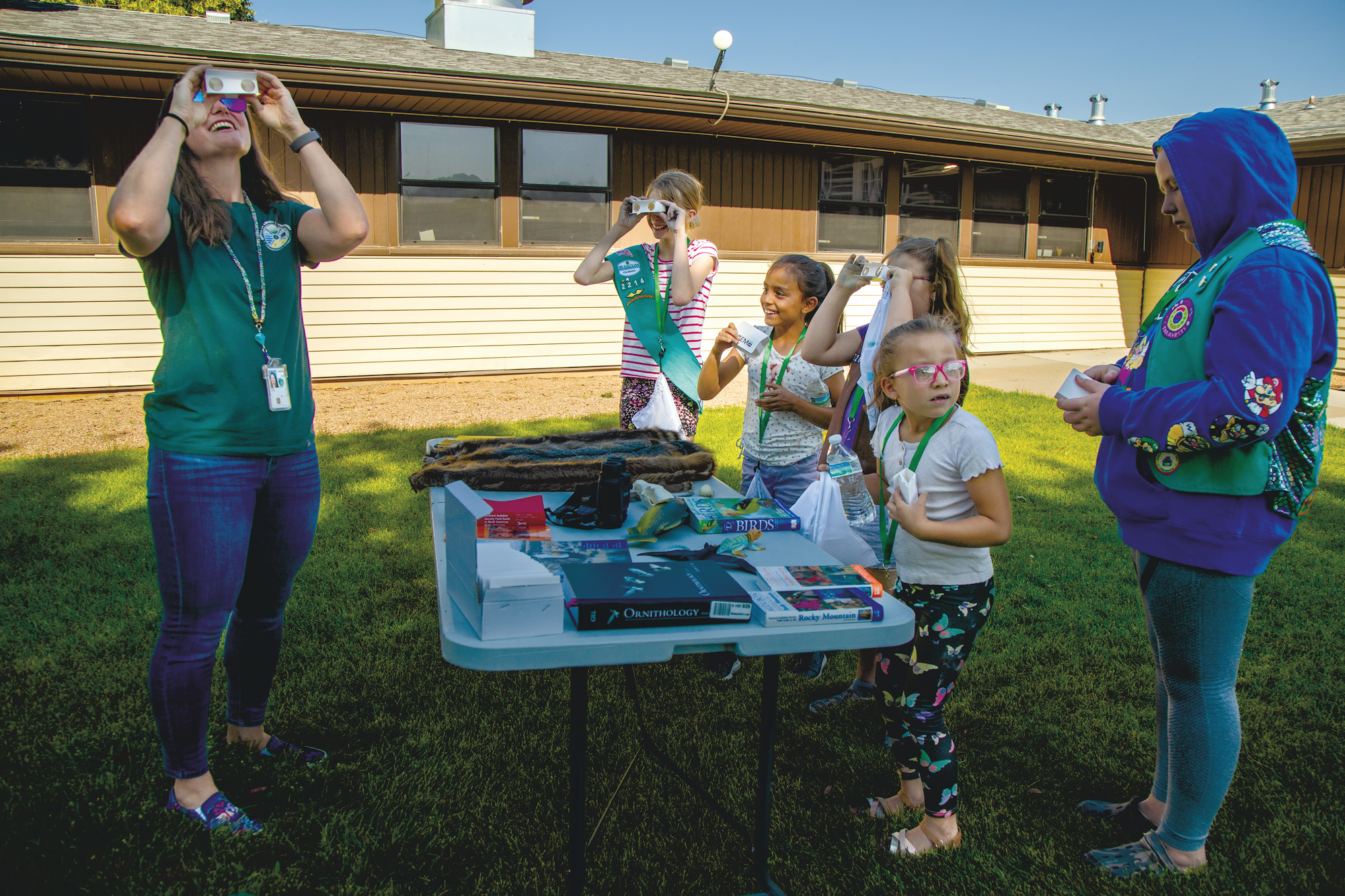
Photos courtesy of U.S. Department of Energy
Years later, Leahy admitted to Bob Silbernagel, a reporter with the Grand Junction Daily Sentinel, that throughout his work with the Manhattan Project, he operated on a need-to-know basis. “I didn’t know what the material was needed for,” he said. “They just told me to go get it.”
So while Leahy didn’t know exactly why he was procuring uranium for the government, he did know that he was undercover. Posing as a representative of the U.S. Vanadium Corporation, he scouted the local area for a mill site.
Vanadium, along with radium and uranium, is a valuable mineral found in carnotite ore. Carnotite ore is abundant in the Uravan Mineral Belt south of Grand Junction. Until the 1930s, uranium was disposed of as a mostly worthless by-product, with radium and vanadium being the valuable components. Used to harden steel, vanadium had many domestic and military uses: think automobiles and battleships. So no one in Grand Junction would have taken notice of a businessman looking to increase local refining capacity.
In August 1943, Leahy purchased a 55-acre parcel along the Gunnison River, near the confluence with the Colorado River. Located below the municipal cemetery on the outskirts of town, this quiet location was home to a gravel pit and a small log cabin that served as a family home and office. It also had a very useful rail spur. After securing the property for $10,500, work began and a few months later, a uranium and vanadium refinery, a laboratory and a warehouse were built on the site.
Today, the site’s cabin is the Atomic Legacy Cabin, a museum and educational facility standing in its original location between the Department of Energy’s Office of Legacy Management (LM), which monitors and manages uranium mill tailings storage facilities, and the local Business Incubator Center.
“The Atomic Legacy Cabin isn’t just a log cabin turned museum,” says Paul Kerl, a supervisory engineer with the Office of Legacy Management. “It’s a direct link to a huge part of American history that happened in Western Colorado. It started as a secret uranium processing site for the Manhattan Project and is now a recognized historical landmark. The Cabin helps us understand how scientists of the past impacted our country’s history, and how the work of LM’s scientists affects our community today.”
Opened in 2019, the Atomic Legacy Cabin offers free admission and a fascinating trip back in time, highlighting many components of the region’s mining and energy development history. World War II and the Manhattan Project are a primary focus and the history reads like a novel.
Other topics include geology, early uses of vanadium and radium (which at one point was much more valuable than gold) and the impact of mining and the Manhattan Project across the Colorado Plateau and the Four Corners region.
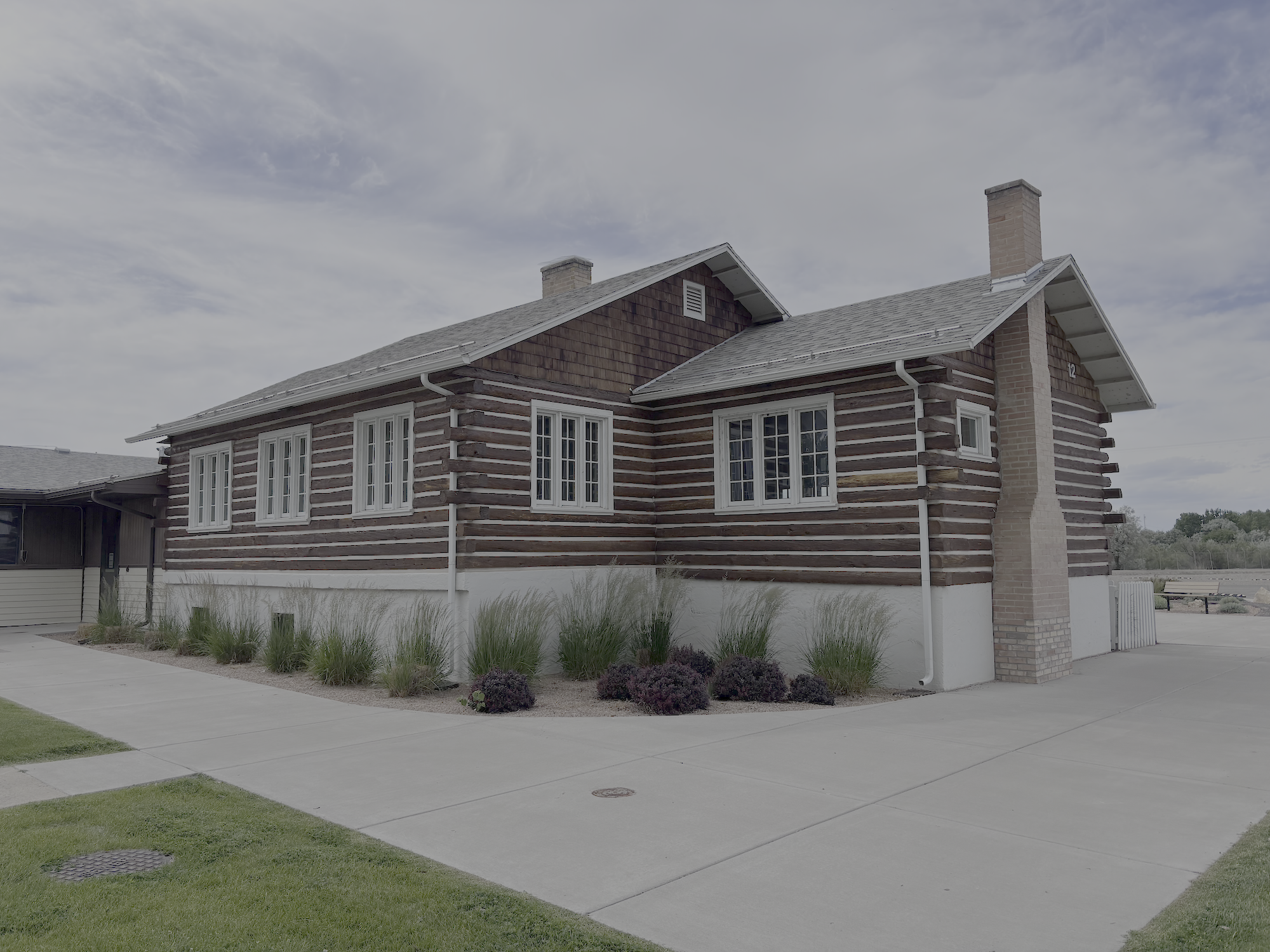
Photo by Kitty Nicholason
The transition from World War II to the Cold War, the development of atomic energy, the uranium boom that began in the late 1940s, and the cleanup and environmental restoration following mineral extraction and processing are highlighted, bringing the story to the present day.
Interpretive staff are on-site to answer questions and share additional details and facts. Tours for groups of 10 or more are available with advance notice, as are on-site educational history and science explorations for students in grades K-12.
“For kids and families who love to learn, the Atomic Legacy Cabin offers a look into the unique story of the Colorado Plateau through science, technology, engineering and math (STEM) programs,” shares Shawn Montgomery, an LM STEM coordinator. “Trained interpreters use hands-on activities to teach about the big discoveries of the nuclear age, cleaning up the environment and how nature has changed at over 100 former project sites. They make these important topics easy to understand and exciting for everyone.”
Montgomery’s colleague, Sara Woods, an LM site manager, adds that “experts in history, rocks, water, nature, chemistry and building things are here to inspire young minds in classrooms and through engaging talks, helping everyone better understand our past and what’s possible for the future.”
In addition to programs at the cabin, off-site presentations can be arranged, including walking tours of Las Colonias Park, an area which was central to the sugar beet industry, then home to a uranium processing mill, and now serves as one of the Grand Valley’s most popular cultural assets with an outdoor amphitheater. Historical presentations are not limited to students and can be arranged for groups of all ages.
Living in Western Colorado, many residents have a general awareness of the region’s atomic contributions. A visit to the Atomic Legacy Cabin — exploring interactive displays and exhibits, studying photos and listening to oral histories — rounds out the story with fascinating characters and unforeseen consequences. This is a history that includes Madame Marie Curie’s use of Western Colorado radium in her research, the application of radioactive materials in household goods and the sobering use of local uranium in atomic weapons. It is also a history in which prospecting fortunes were made and lost, communities founded and abandoned and science was pushed to its limits.
If Second Lieutenant Philip Leahy’s role in the Manhattan Project makes him adjacent to a character in a novel, the regional history as presented at the Atomic Legacy Cabin is a compelling plotline that is definitely worth discovering.
The Atomic Legacy Cabin is open Monday through Friday, excluding federal holidays, from 10 a.m. - 4 p.m. For more information, visit energy.gov/lm/atomic-legacy-cabin or call 970.248.6251.
Originally published in the summer 2026 issue of Spoke+Blossom.