

What Extreme Mountaineer Ryan Kushner Teaches Us About Longevity
At extreme altitudes, the body begins to shut down. Oxygen thins. Muscles cannibalize themselves. The brain slows. Climbers call it the “Death Zone.” Most rely on bottled oxygen and high-altitude support teams to mitigate the damage.
Ryan Kushner does not.
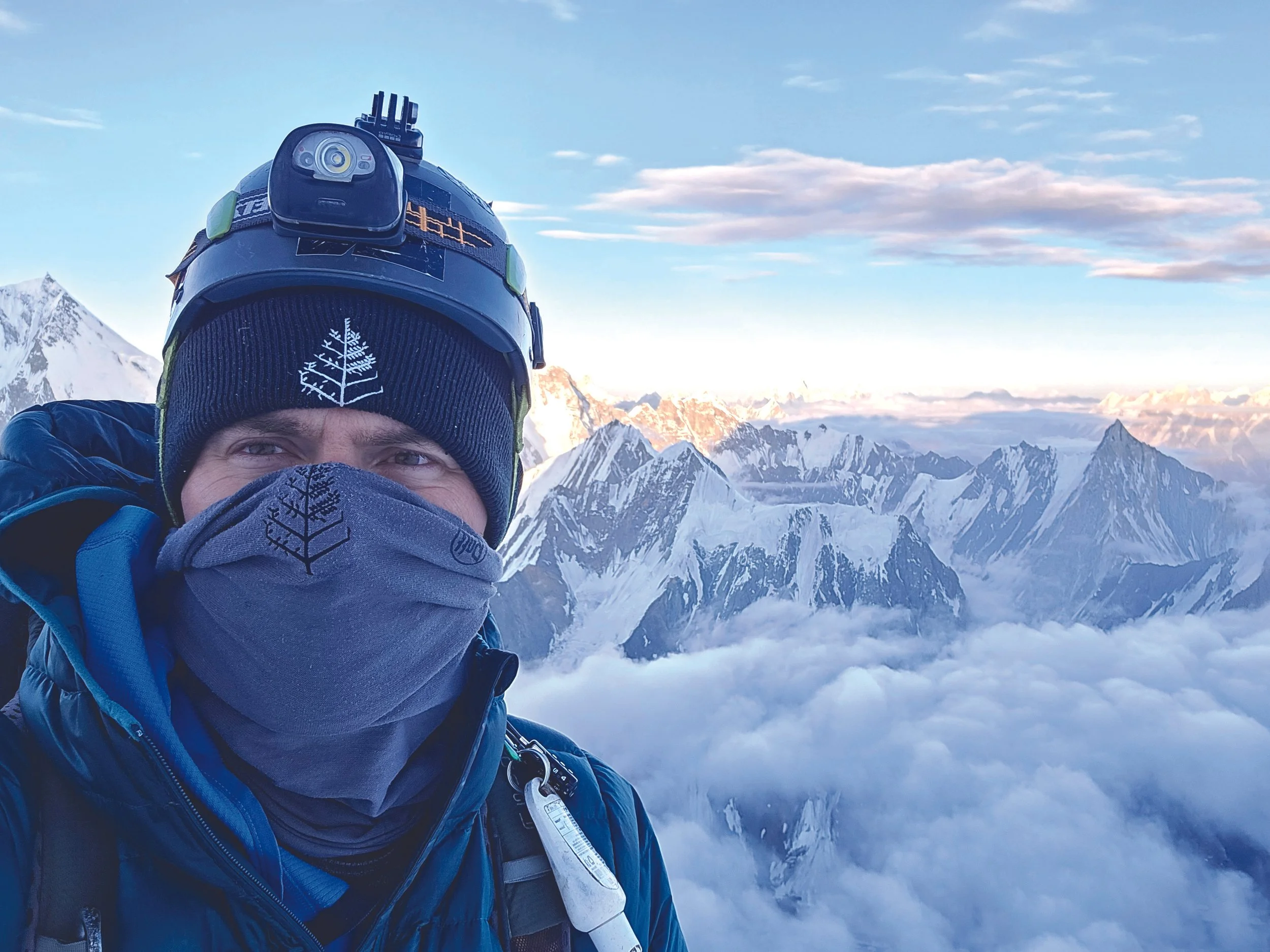
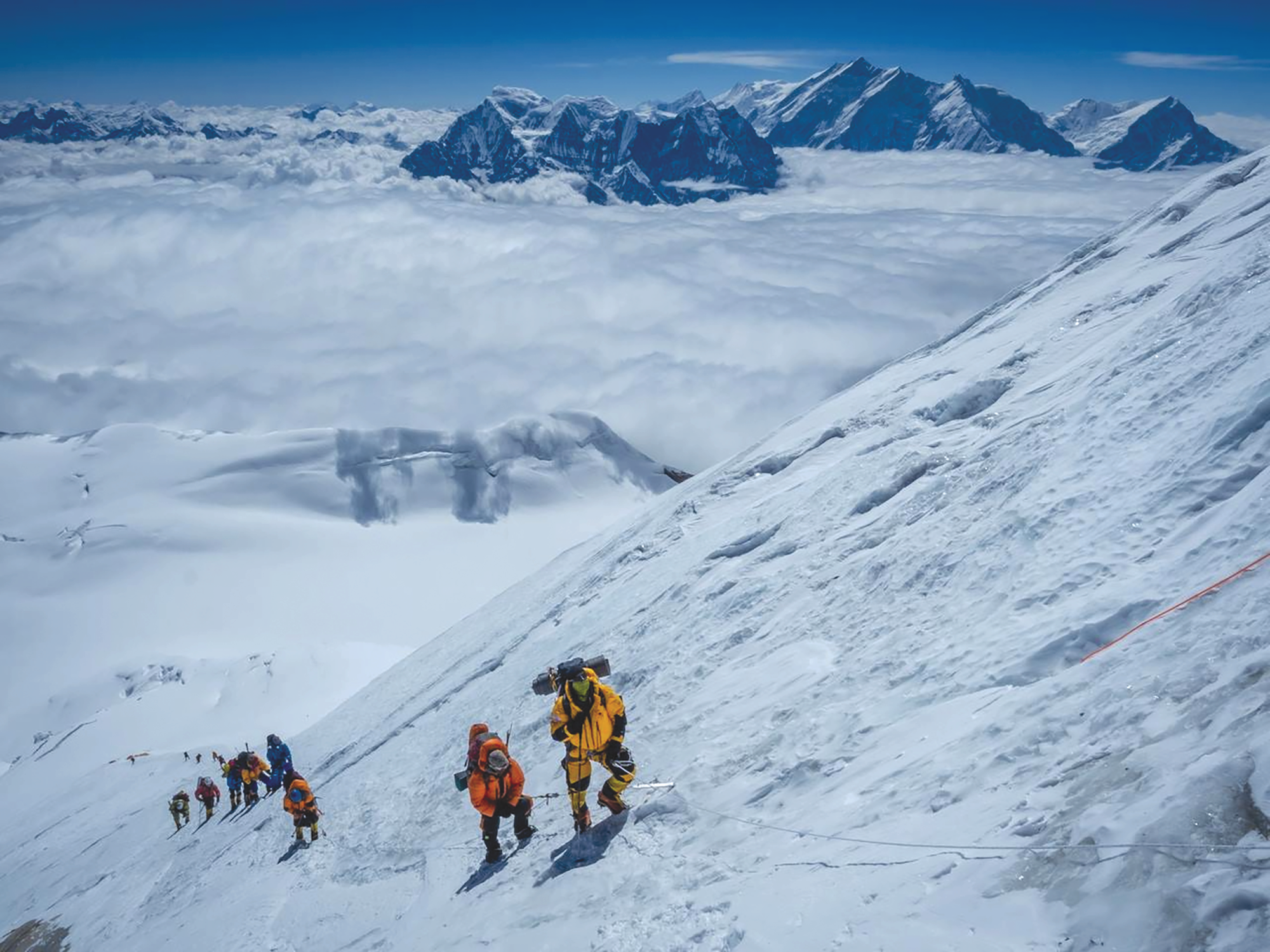
The Denver-based bellman at Four Seasons Hotel Denver climbs some of the tallest mountains on Earth without supplemental oxygen or Sherpa support — a purist approach that strips mountaineering to its most unforgiving terms. “I want to test the mountain as real as possible,” Kushner says. “I carry all my gear. There’s no bottled oxygen. I’ve trained my body basically to the point where I don’t need it so far.”
At 44, Kushner is candid about the risks of high-altitude climbing. But his story didn’t begin on an 8,000-meter peak. It began in Minnesota, at 255 pounds, winded by stairs. After moving to Colorado in 2008, he attempted his first 14er (a 14,000-foot peak) — and was “absolutely destroyed.” He promised himself he’d climb one every summer. The next attempt was just as humbling.
That winter, he decided he’d had enough. “I remember looking at myself in the mirror,” he says. “I just didn’t like the way I looked. I said, ‘you can’t continue like this.’” He didn’t overhaul his life overnight. He added cardio to the end of workouts and tweaked his diet. Over six months, he lost 55 pounds. “When the summer rolled around, it was like a light went on,” he says.
That year he climbed 15 Colorado 14ers. Then came Mount Rainier. Then Pico de Orizaba in Mexico — the third tallest peak in North America — where he first crossed 15,000 feet and felt what he describes as a euphoric rush. I can’t believe I’m this high. I can’t believe I can still breathe here. The peaks kept getting bigger: Bolivia, Denali, Aconcagua. Eventually, the Himalayas.
Today, the mountains that once flattened him have become training grounds. “I carry water jugs up 14ers in the summer,” he says. “I’ll mountain bike the dirt road to the trailhead, then load up my backpack with water and carry it up the mountain. It sounds crazy to a lot of people, but to me, that’s just normal.”

ADAPTATION — AND LIMITS
In a sport defined by hypoxia, Kushner has learned both the resilience and fragility of the human body. In 2024, long COVID settled in his lungs just as he was preparing for an expedition to Pakistan. For a climber who forgoes bottled oxygen, it was terrifying. “Is my mountaineering career over?” he says he remembers thinking.
After a battery of lung tests, doctors delivered unexpected news. “They said, ‘Your lungs are a little bigger, and you absorb 28% more oxygen than the average person.’ That was very interesting for me to find out.”
Still, experience has taught him restraint. On Aconcagua, a teammate developed pulmonary edema after ascending too quickly. Kushner helped carry nearly 100 pounds of gear down the mountain before attempting — and completing — the summit alone. “You just learn how you do at altitude,” he says. “A lot of it comes with experience.”
THE FALL
If altitude tests physiology, injury tests identity. In 2019, while rappelling — something he had done “literally thousands of times” — Kushner lost focus for a moment. “It’s like driving on the highway and looking down at your phone,” he says. “I took my eye off one small detail and fell 30 feet.”
He broke three discs in his back. His leg wrapped around a rock. His spinal cord was nearly severed. His liver was lacerated.
When he woke up, he asked three questions: Was his girlfriend (now wife) there? Did his parents know? Would he walk again? “The doctor said, ‘Yeah, you’ll walk again. You’ll probably never climb again.’” Kushner pauses. “That’s all I needed.”
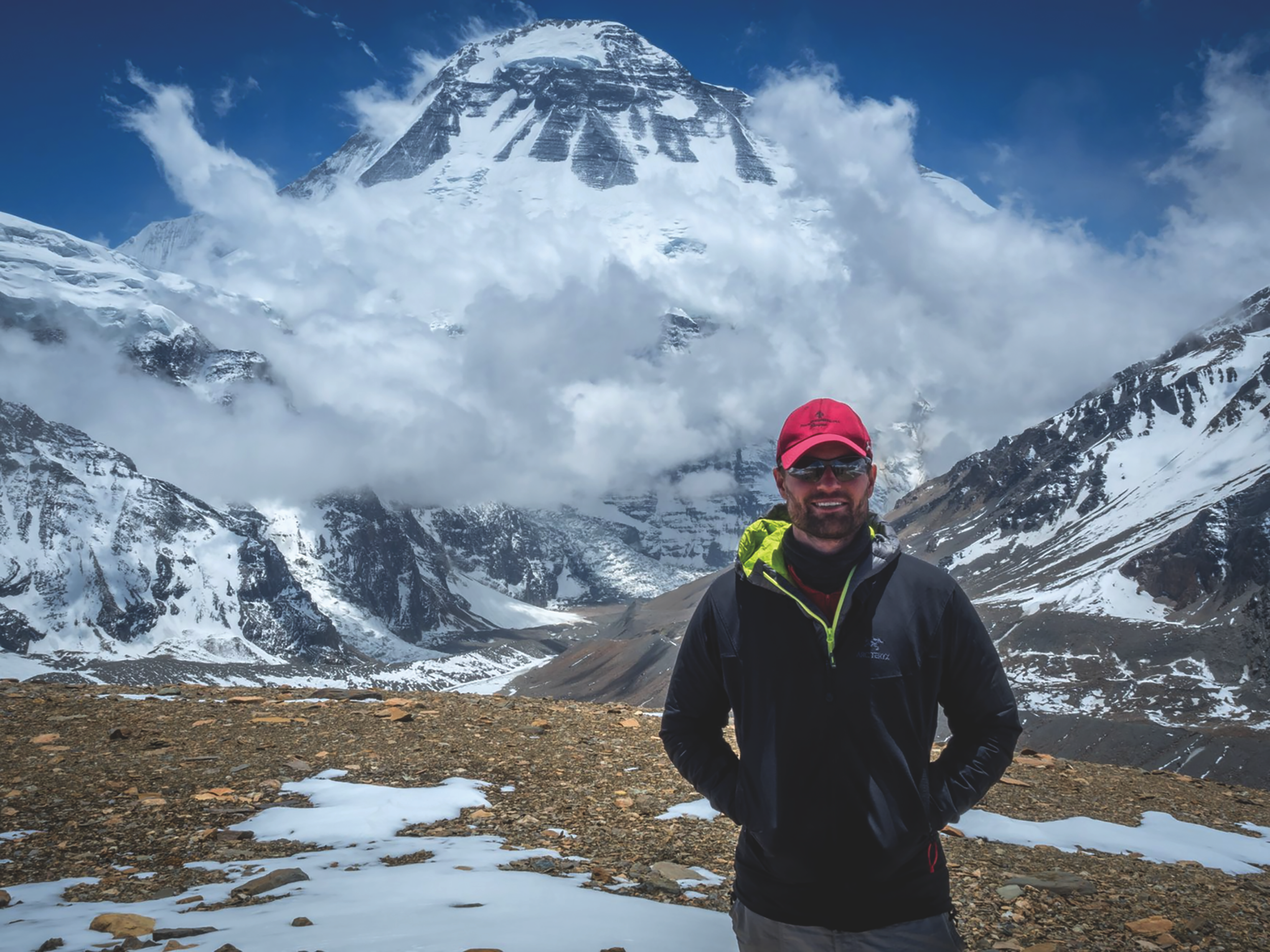
Rehabilitation, he says, was “95% mental.” Physical therapists were worried he might push too hard because he was so determined to return. Today, one leg is nearly an inch shorter, and he wears a large heel lift. There are aches. But he has since returned to the Himalayas.
When hotel guests mention their own injuries, he often shifts the conversation. “How’s your mental? How’s your headspace?” he asks. “That’s the number one thing that will get you back.”
PURPOSE BEYOND THE SUMMIT
By day, Kushner is the first face many guests encounter at Four Seasons Denver. “There aren’t many jobs that will give me one or two months off to go climb a mountain,” he says. After some initial hesitation, the hotel embraced his pursuits. He now summits with the Four Seasons logo stitched across his jackets and beanies. “I feel very fortunate to be in the position I’m in.”
Climbing, he admits, can be selfish. So, he reframed it. Over the course of his career, he has raised more than $42,000 for causes ranging from the Alzheimer’s Association in honor of his grandparents to childhood cancer treatments for a friend’s son with Hodgkin’s lymphoma.
REDEFINING LONGEVITY
For a man who has stood atop some of the world’s most dangerous mountains, longevity isn’t about stacking summits. “It means enjoying it,” he says. “As soon as I stop enjoying it, that’s it.”
This year, work constraints shortened his usual two-month Himalayan expedition to one month. Instead of forcing a bigger objective, he pivoted to a remote peak in Kyrgyzstan. “There are many beautiful options around the world,” he says. “It doesn’t have to be the biggest peak. I’m excited to experience somewhere new.”
That perspective — shaped by time in Bolivia, Nepal, Pakistan and Peru — may be the greatest lesson mountaineering has given him. “You realize sometimes we have our life perspectives totally wrong,” he says. “People focus on food, family, surviving and enjoying life together. You start to appreciate every moment.”
THE INVISIBLE TEAM
Behind every summit photo is a quieter story. Kushner credits his parents, his sisters — one of whom paused medical school to help him recover — and his wife, who has endured the uncertainty of watching him leave for some of the planet’s most volatile terrain.
Longevity, he says, isn’t about conquering the highest peak. It’s sustaining the passion long enough to keep going.
As long as he’s still excited to shoulder a pack and step onto a new trail — even if it’s just the steep foothill behind Red Rocks where he has trained hundreds of times — he considers himself rich in the only currency that matters.
“As long as I’m excited to look forward to these trips,” he says, “that’s the longevity.”
Originally published in the fall 2026 issue of Spoke+Blossom.