

Ecosystems Enlarged: Finding Hidden Details In Western Colorado With Macro Photography
As the forester and environmentalist Baba Dioum once said, “In the end, we will conserve only what we love; we will love only what we understand; and we will understand only what we are taught.” We are fortunate to have a wealth of natural beauty in Western Colorado, but its smaller inhabitants — the insects, the reptiles, the humble plants — are often overshadowed by its grander features. This is a shame, for they are as much a part of this land’s heritage as the towering San Juans or the orderly rows of orchards in Palisade.
It is understandable that we so often miss the fine details. We humans are quite large compared to most living organisms — so much so that visualizing smaller parts of the natural world poses a challenge. Not so with macro photography, which magnifies small subjects to fill the entire frame with striking detail. I hope these images inspire you to take a closer look at the natural world around you, even in more confined spaces like a backyard or a city park. The more we connect with smaller life forms, the more likely we are to care for them.
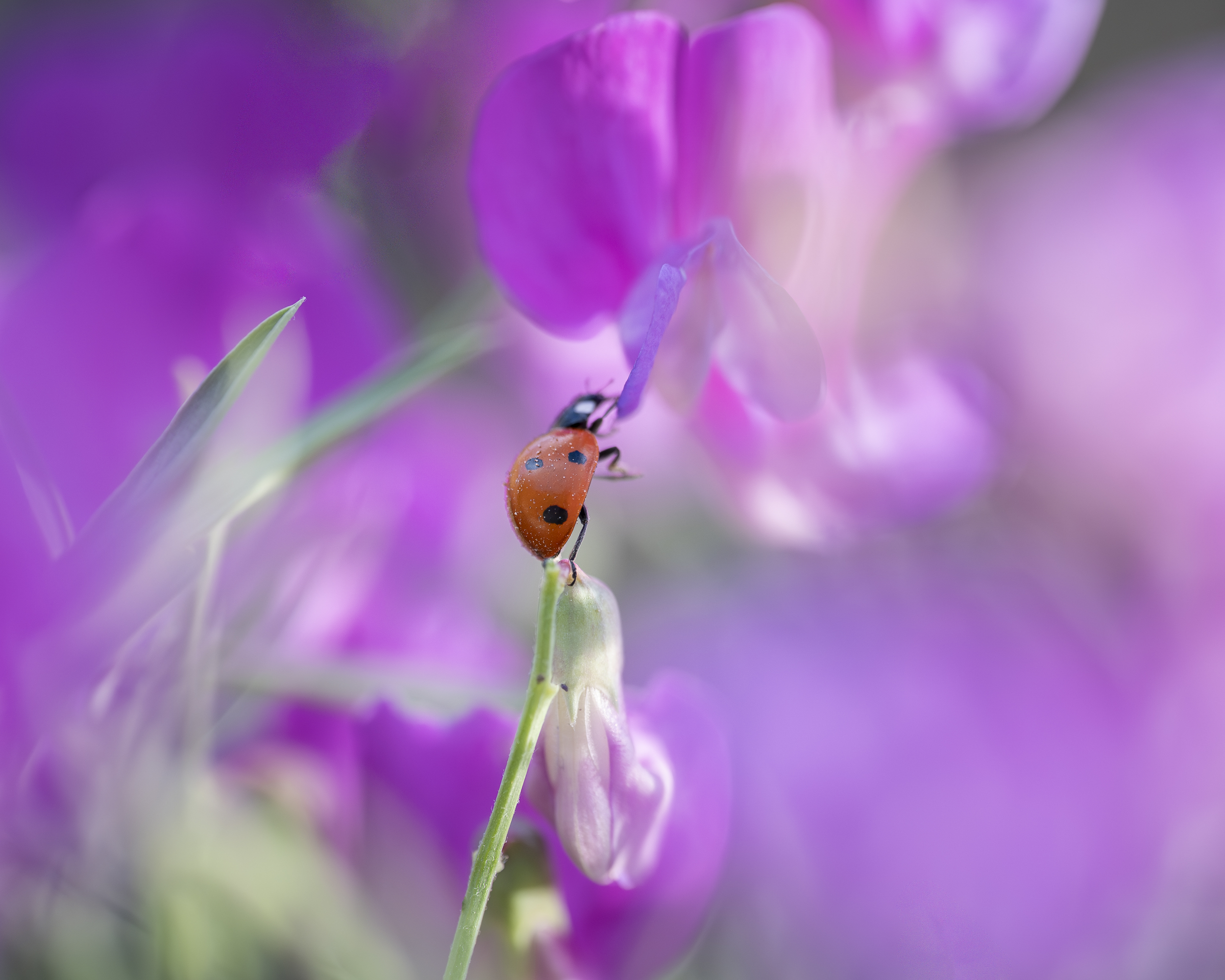
This pea plant is lucky to have what amounts to a bodyguard at the macro scale. Ladybugs’ voracious appetite for aphids makes them natural pest controllers. They’re also pollinators, but they’re not quite as efficient as bees or butterflies.
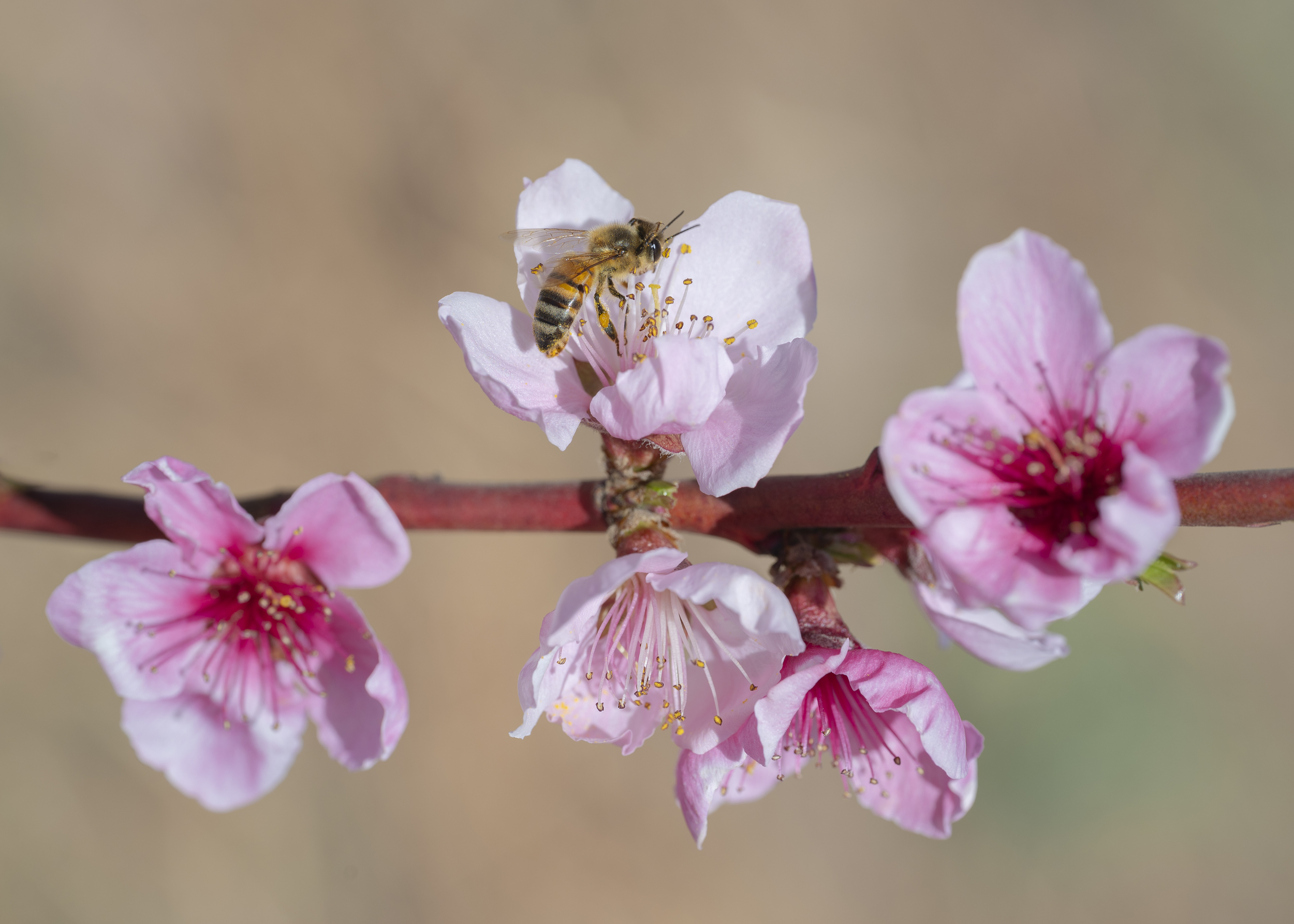
A bee collects pollen from a peach blossom near Orchard Mesa in search of the nectar stored inside. This symbiotic relationship between pollinators and flowers is one of the most important for Western Coloradans, as most crops grown here require pollination to reproduce. Peaches are one of the few that are self-fertile, but a little boost from pollinators never hurts.
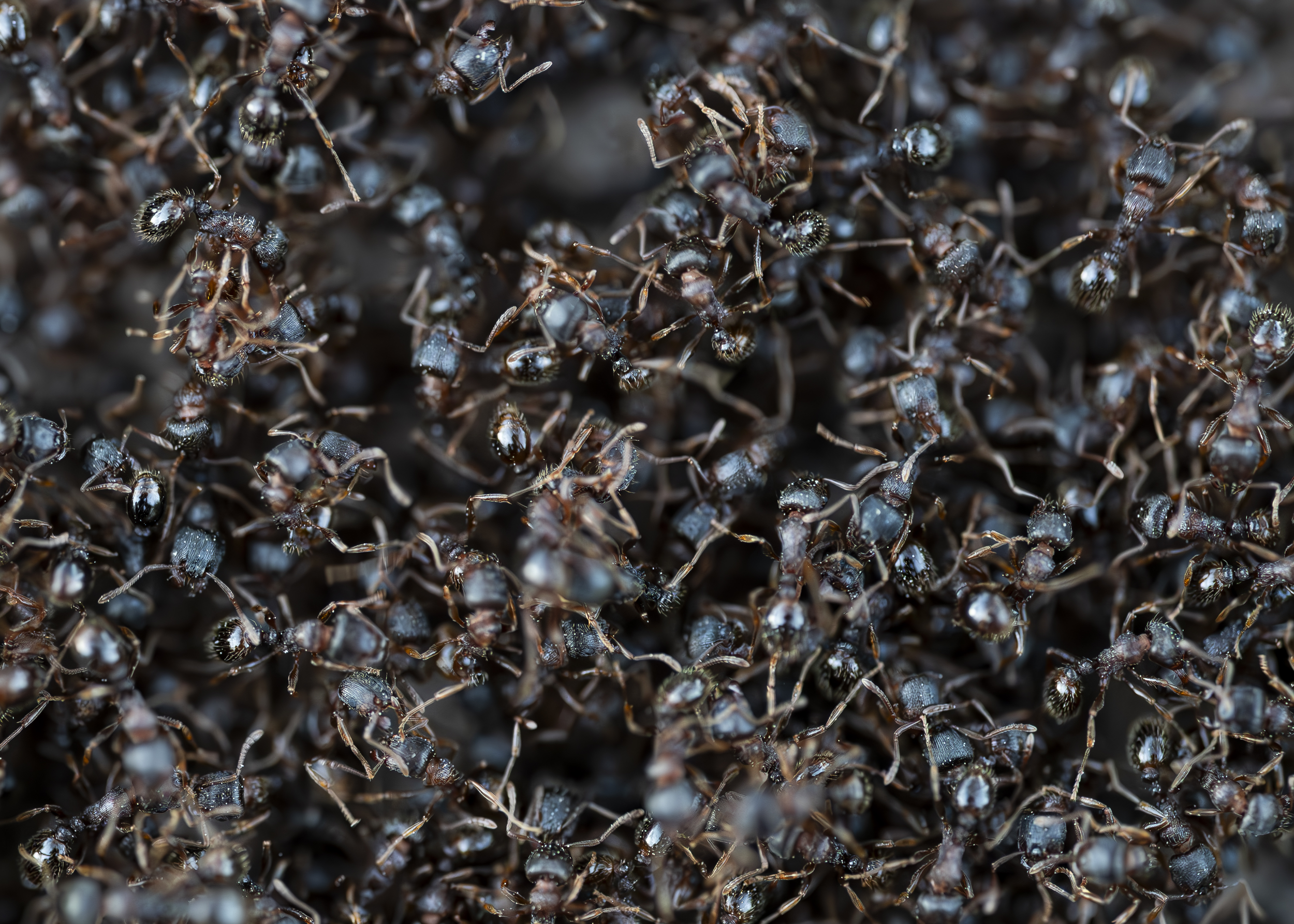
Two rival colonies of pavement ants fight for territory near the entrance to my home. Not only do ants serve as food for many larger species, but their behavior is beneficial to the surrounding ecosystem. They aerate soil, decompose plant and animal material, and disperse plant seeds.
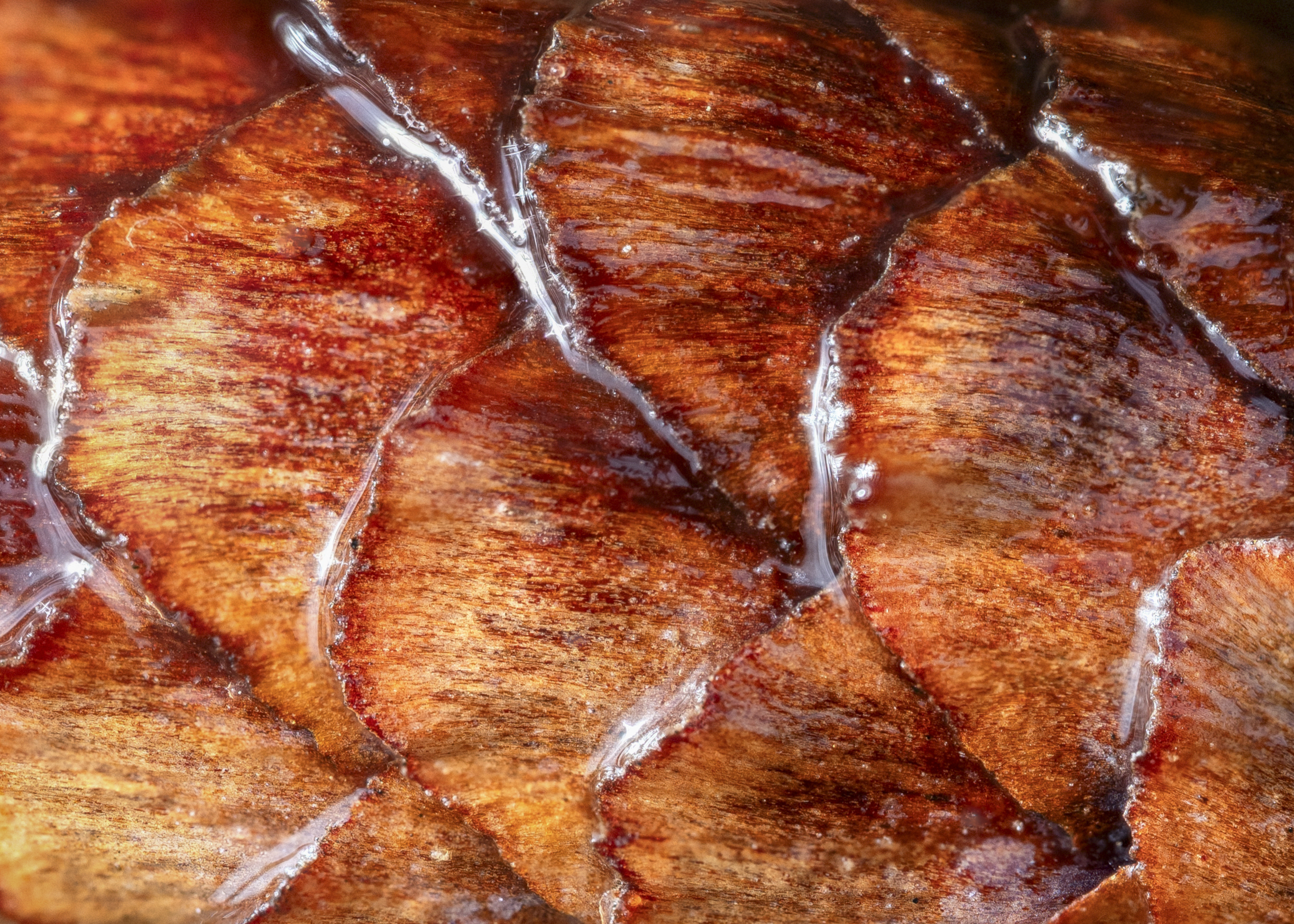
These are scales from an Engelmann spruce cone. When exposed to moisture, the cones close up — a clever adaptation that protects the seeds inside from decay and ensures they aren’t released until there are dry conditions, which maximizes the likelihood that they will travel far.
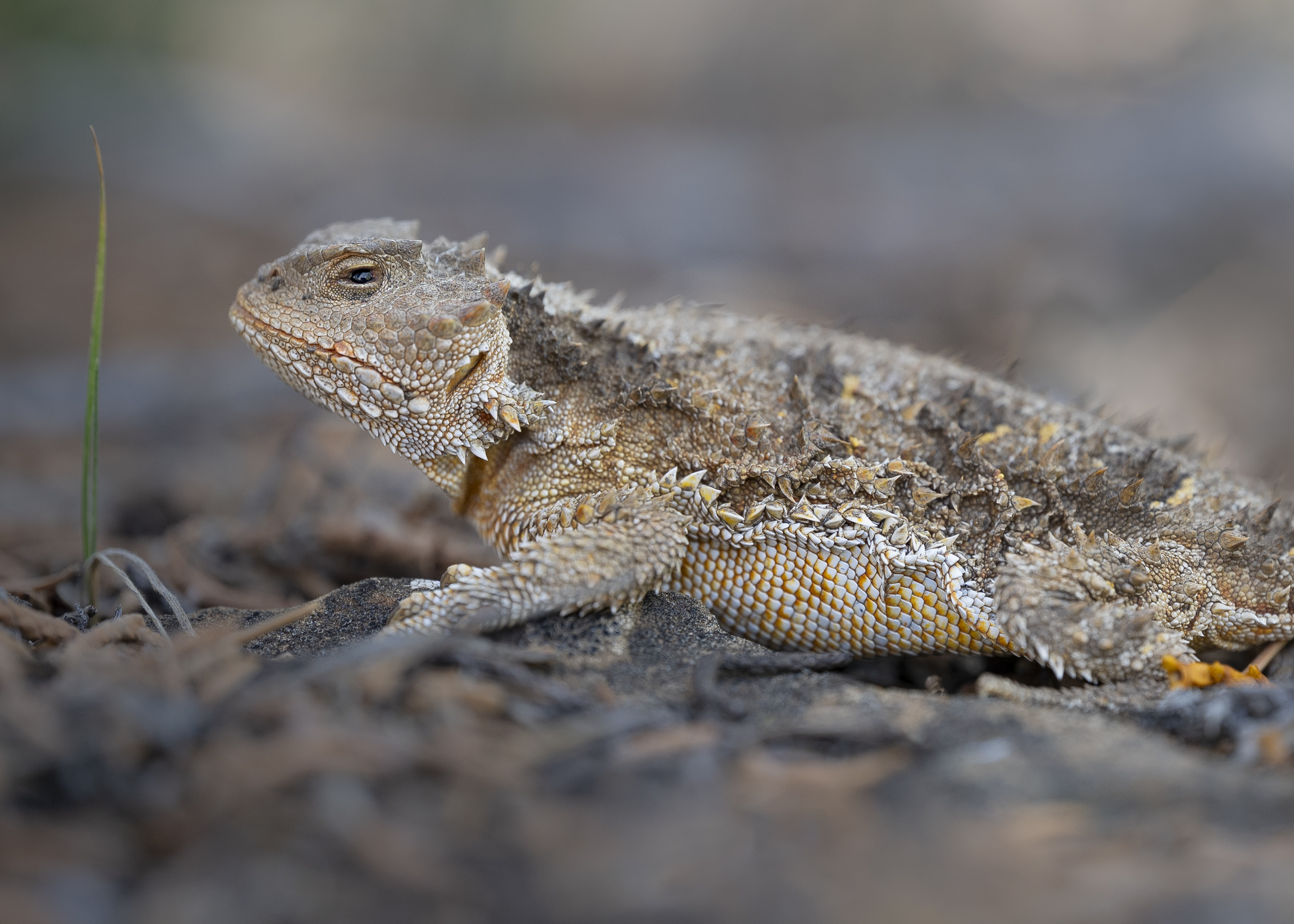
Speaking of ants, this horned lizard relies on them for more than half of its diet. Horned lizards are masters of camouflage: their flat bodies blend in seamlessly with rocks and soil. They squirt blood from their eyes when threatened, which has a foul taste against feline and canine predators.
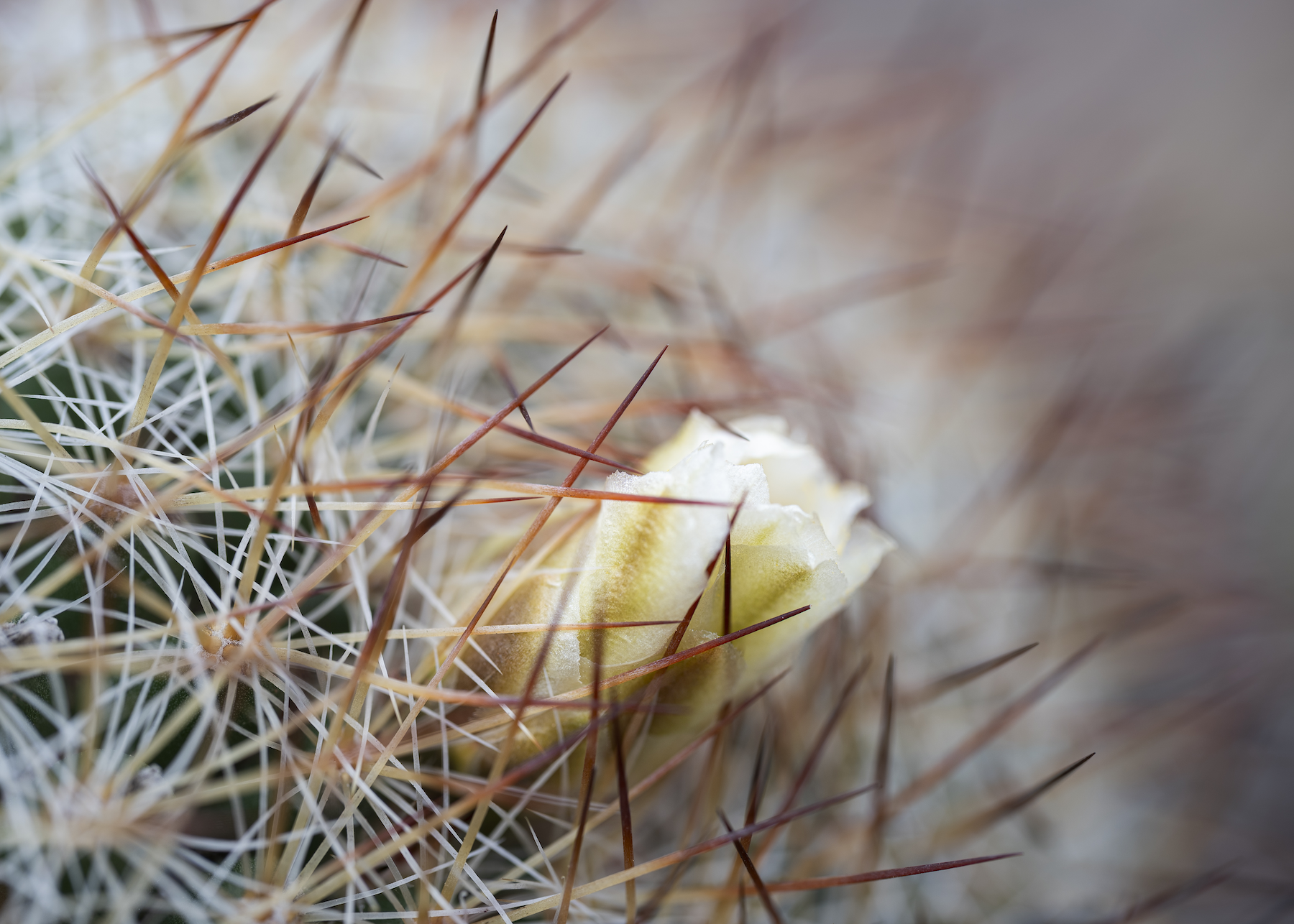
A single flower emerges between the spines of a mountain ball cactus. Like many cactus species, mountain ball cacti use CAM (Crassulacean Acid Metabolism) photosynthesis, an evolutionary adaptation that splits the photosynthetic process across time. Instead of doing everything at once during the daytime, mountain ball cacti gather and store carbon dioxide at night. This reduces water loss — a high priority for plants in arid environments. The stored carbon dioxide, along with water and sunlight, are the ingredients that allow plants to generate usable energy in the form of glucose.
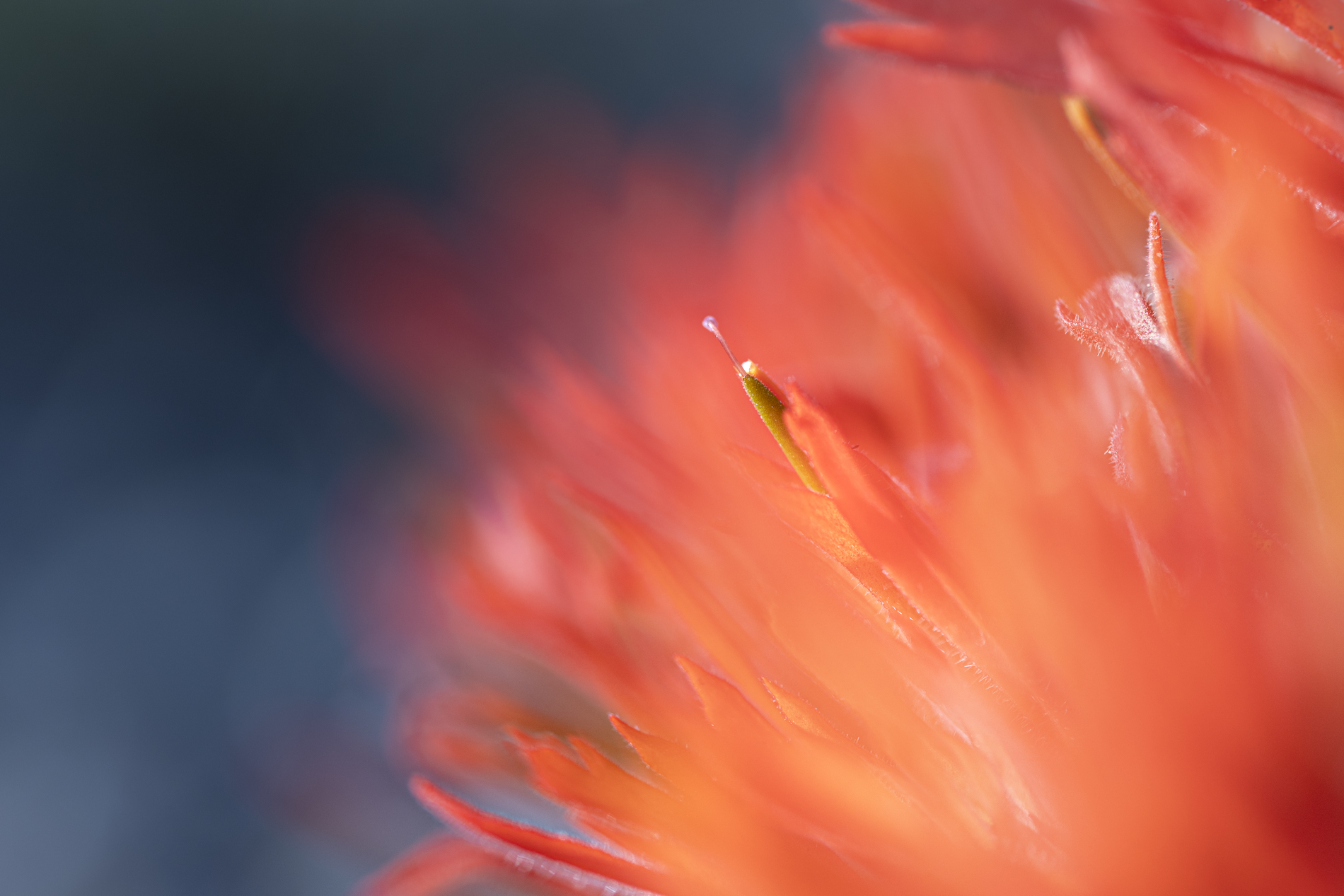
These blazing red tendrils are modified leaves, called bracts, of an Indian paintbrush plant. While these plants can photosynthesize, they also parasitize nearby plants by stealing nutrients through their root systems. Their roots absorb selenium, making the entire plant toxic to humans if ingested.
Originally published in the summer 2026 issue of Spoke+Blossom.